Tag: presentation skills

21 Feb 2026
Senior professional man gesturing while explaining data on a presentation screen to colleagues from different departments in a modern glass-walled meeting room

Presenting Cross-Functionally: Why Your Best Slides Fail Outside Your Department

Quick answer: Your slides fail cross-functionally because they’re structured around your department’s priority filter, not the receiving audience’s. Finance listens for cost and risk. Marketing listens for growth and reach. Operations listens for efficiency and timeline. The Audience Translation Method restructures the same data through the priority filter of whoever you’re presenting to — without creating a new deck from scratch.

My Client’s Slides Got a Standing Ovation From IT. The Board Fell Asleep by Slide 4.

A programme director brought me the same deck he’d used to get IT leadership excited about a platform migration. Detailed architecture. Risk mitigation. Technical milestones. Clear delivery timeline.

He needed to present the same project to the main board — a mix of finance, commercial, and HR directors. Different people, same project, same facts.

I asked him: “What does the CFO care about in this project?” He said: “The technology benefits.” I said: “No. She cares about the £2.1M annual saving and whether you’ll go over budget getting there. That’s slide 1 for her. Your architecture diagram? That’s the appendix she’ll never open.”

We restructured the same data — not a single new fact — through the board’s priority filter. The CFO’s question (cost) became slide 1. The commercial director’s question (customer impact) became slide 2. The HR director’s question (change management) became slide 3. The technical architecture moved to backup slides.

Same project. Same facts. Completely different slide order. The board approved it in one meeting — a project that had been stuck in technical review for three months.

The 5 Priority Filters (Every Audience Uses Only One)

After 24 years working across departments in large organisations, I’ve identified five priority filters that cover virtually every cross-functional audience. Each department processes your information through one dominant filter — and largely ignores everything else until that filter is satisfied.

1. The Cost Filter (Finance, CFO, Budget holders). First question: “What does this cost and what’s the return?” They’re scanning for numbers, risk to budget, and payback timeline. If your first three slides don’t address cost, they mentally check out and wait for the financial summary.

2. The Growth Filter (Commercial, Marketing, Sales, CEO). First question: “How does this grow revenue, customers, or market position?” They want impact on the top line. Technical capability only matters if it connects to growth.

3. The Efficiency Filter (Operations, COO, Delivery teams). First question: “Does this make things faster, simpler, or more reliable?” They’re scanning for process improvement, capacity impact, and timeline risk. Everything else is noise until efficiency is addressed.

4. The Risk Filter (Legal, Compliance, Risk committees). First question: “What could go wrong and have we covered it?” They’re scanning for exposure, regulatory implications, and precedent. Benefits are secondary until risk is addressed.

5. The People Filter (HR, Change management, People leaders). First question: “What’s the impact on people — skills, roles, morale?” They want to know about change management, training needs, and employee experience. Technology and finance are background until the people impact is clear.

The mistake most professionals make isn’t having bad content. It’s leading with their own department’s filter when presenting to people who use a different one. Your executive presentation structure needs to flex based on who’s in the room.

Five audience priority filters showing cost filter for finance, growth filter for commercial, efficiency filter for operations, risk filter for legal, and people filter for HR with lead with this indicators

Present the Same Data to Any Audience — And Get Buy-In Every Time

The Executive Slide System gives you audience-adaptive slide structures for cross-functional presentations, boards, steering committees, and mixed-stakeholder meetings — so your slides work for finance, commercial, operations, and leadership.

Get the Executive Slide System → £39

Built from 24 years of corporate experience across banking, consulting, and financial services.

The Audience Translation Method (3 Steps)

You don’t need to build a new deck for every audience. You need to restructure the same deck in 15 minutes using three steps.

Step 1: Identify the dominant filter in the room. Before you present, answer one question: “What’s the first thing this audience will want to know?” If it’s a finance audience: cost. Commercial: growth impact. Operations: timeline and efficiency. If it’s a mixed audience (like a board), identify the most senior person’s filter — that’s your lead slide.

Step 2: Restructure your first three slides through that filter. Your slides already contain the information — it’s just in the wrong position. Move the data that answers the dominant filter’s question to slides 1-3. Everything else slides back. You’re not adding content. You’re changing the order.

❌ Wrong (presenting a tech project to Finance):

Slide 1: Platform architecture overview. Slide 2: Technical capabilities. Slide 3: Migration timeline. Slide 4: Cost and ROI.

✅ Right (same project, translated for Finance):

Slide 1: £2.1M annual saving + 14-month payback. Slide 2: Budget vs. actual (on track). Slide 3: Risk mitigation for the two financial risks. Slide 4: Technical summary (one slide).

Step 3: Translate your headlines into their language. Every department has vocabulary that signals “this person understands our world.” Finance responds to “ROI,” “payback period,” “cost per unit.” Marketing responds to “conversion,” “reach,” “customer acquisition.” Operations responds to “throughput,” “capacity,” “cycle time.” Replace your department’s jargon with theirs — same data, different labels.

Understanding stakeholder psychology is what makes this method work. You’re not dumbing down your content. You’re restructuring it through the lens of what your audience already cares about.

The Executive Slide System includes audience-adaptive frameworks for cross-functional meetings, boards, and mixed-stakeholder presentations.

Get the Executive Slide System → £39

Same Project, Three Different Audiences — Worked Example

Here’s a real restructure using a CRM implementation project. Same facts, three audiences:

To the CFO (Cost Filter):

Slide 1: “CRM investment: £340K. Projected revenue uplift: £1.2M in Year 1. Payback: 4 months.” Slide 2: “Budget status: £15K under forecast. No change requests pending.” Slide 3: “Financial risk: vendor pricing locked for 36 months. Overspend buffer: 8%.”

To the Sales Director (Growth Filter):

Slide 1: “Pipeline visibility increases from 60% to 95%. Lead response time drops from 4 hours to 12 minutes.” Slide 2: “Sales team adoption: 78% actively using (target: 70%). Top performers adopted first.” Slide 3: “Q3 forecast: 15% uplift in conversion rate based on early data.”

To the Operations Director (Efficiency Filter):

Slide 1: “Manual data entry eliminated. Team saves 12 hours/week.” Slide 2: “Integration with existing systems complete — no parallel running needed.” Slide 3: “Go-live timeline: on track. No dependency on other projects.”

Same CRM. Same week. Three completely different slide 1s. The information the audience needs first changes everything about how they receive the rest of your presentation.

Same CRM project data restructured for three audiences showing CFO sees cost and payback first, Sales Director sees pipeline and conversion first, and Operations Director sees efficiency and time savings first

The Executive Slide System (£39) gives you audience-adaptive slide structures and priority filter frameworks for every cross-functional scenario — restructure any deck in 15 minutes.

The 15-Minute Cross-Functional Slide Restructure

You have an existing deck and 15 minutes before presenting to a different audience. Here’s the rapid restructure process:

Minutes 1-3: Identify the filter. Who’s in the room? What’s their dominant priority? If mixed, who’s the most senior decision-maker?

Minutes 4-8: Restructure slides 1-3. Find the data in your existing deck that answers the dominant filter’s first question. Move those slides (or those data points) to positions 1-3. You’re not creating new slides — you’re reordering.

Minutes 9-12: Translate three headlines. Rename three slide titles using the receiving department’s vocabulary. “Technical architecture” becomes “System reliability” for ops. “User adoption metrics” becomes “Change management progress” for HR. “Revenue impact” stays “Revenue impact” for commercial.

Minutes 13-15: Cut or move two slides. Identify the two slides most rooted in your department’s filter and move them to backup. Your deck just got shorter and more relevant. The approach to reading the room before you enter it starts with this 15-minute preparation.

If your first slide doesn’t match their priority filter, you lose them before slide 3. The Executive Slide System (£39) includes audience-adaptive templates so you can restructure for any department in minutes — not hours.

Common Questions About Cross-Functional Presentations

Why do my presentations fail with other departments?

Your presentations fail cross-functionally because they’re structured around your department’s priority filter. Every department processes information through a different lens — finance hears cost, marketing hears growth, operations hears efficiency. When your first three slides don’t address their priority, they mentally disengage before you reach the content that matters to them. The fix isn’t better content. It’s restructuring the same content so their priority appears first.

How do you present the same data to different audiences?

Use the Audience Translation Method: identify the dominant priority filter of your audience (cost, growth, efficiency, risk, or people), restructure your first three slides to address that filter first, and translate your slide headlines into the receiving department’s vocabulary. You’re not building a new deck — you’re reordering and relabelling the same data. This takes 15 minutes and dramatically changes how different audiences receive the same information.

How do you present to a mixed audience with different priorities?

When presenting to a mixed audience, identify the most senior decision-maker’s priority filter and lead with that. If the CFO is the most senior person, lead with cost and return. After addressing the dominant filter in slides 1-3, briefly acknowledge other filters: “The operational efficiency gain is covered on slide 5” and “People impact and change management is on slide 6.” This signals that you’ve considered everyone’s perspective while still leading with the decision-maker’s priority.

Stop Rebuilding Your Deck for Every Audience. Restructure It in 15 Minutes.

The Executive Slide System gives you the Audience Translation Method plus slide structures for boards, steering committees, and every cross-functional scenario — so one deck works for any room.

Get the Executive Slide System → £39

Used in cross-functional meetings, programme boards, and multi-stakeholder presentations across corporate teams.

Frequently Asked Questions

Do I really need a different version for every department?

No. You need one deck with a flexible first three slides. The Audience Translation Method doesn’t require building separate decks — it requires knowing which data to lead with for each audience. Most cross-functional restructures take 15 minutes because the data is already in your deck. You’re moving slides, not creating them.

What if I’m presenting to a department I don’t understand well?

Ask one person in that department a single question before your presentation: “What’s the first thing your team will want to know about this project?” Their answer tells you the dominant priority filter. You can also look at what that department measures — their KPIs reveal their filter. Finance measures cost and return. Marketing measures reach and conversion. Operations measures throughput and reliability.

What about presenting to senior leadership who came from different departments?

People carry their departmental filter even after promotion. A CFO who came from commercial still thinks in growth terms as well as cost. A COO who came from engineering still values technical detail. When presenting to a leadership team, research the most senior decision-maker’s career background — it reveals which filter they’ll default to, even if their title suggests otherwise.

Get Weekly Presentation Intelligence

Slide structures, audience frameworks, and the executive communication strategies that work across departments — delivered every week.

Join the Newsletter

Related: If your cross-functional presentation involves recommending a vendor or product, read The Vendor Selection Presentation: How to Get a £500K Decision in One Meeting — the Decision Architecture for comparison presentations.

Your next step: Before your next cross-functional presentation, answer one question: “What’s the first thing this audience will want to know?” Move that answer to slide 1. You’ll present the same data and get a completely different response.

Want the complete Audience Translation Method with priority filters and worked examples for every department combination?

Get the Executive Slide System → £39

About the Author

Mary Beth Hazeldine is the Owner & Managing Director of Winning Presentations. With 24 years of corporate banking experience at JPMorgan Chase, PwC, Royal Bank of Scotland, and Commerzbank, she specialises in executive-level presentation skills and cross-functional stakeholder communication.

A qualified clinical hypnotherapist and NLP practitioner, Mary Beth combines executive communication expertise with evidence-based techniques. She has spent 15 years training executives for board presentations, cross-departmental meetings, and multi-stakeholder decision forums.

Read more articles at winningpresentations.com

14 Feb 2026
Executive woman with quiet confidence standing in boardroom — introvert presentation advantage

Why Introverted Executives Present Better Than Extroverts

Quick answer: Introverted executives often have an advantage in high-stakes presentations because they prepare more thoroughly, listen more carefully, and let their content — not their charisma — carry the room. The traits that make you feel like a weaker presenter are often the traits that make audiences trust you more.

The best board presentation I ever witnessed was delivered by a woman who described herself as “painfully introverted.”

She was a CFO at a mid-cap financial services firm. Before the meeting, I watched her sit quietly in the corridor while her colleagues rehearsed loudly in the breakout room next door. She didn’t pace. She didn’t run through her slides one more time. She just sat with her notes and breathed.

When she stood up, she spoke for nine minutes. Nine. No jokes. No theatrics. No “let me tell you a story about my first day in finance.” Just a clear recommendation, three supporting data points, and a direct ask for approval.

The board approved her proposal without a single challenge. The extroverted VP who presented after her — louder, funnier, more animated — got seventeen follow-up questions and was asked to come back next quarter.

That moment changed how I think about presentation coaching. For years, I’d been helping introverted clients become more like the extroverts they admired. I had it backwards. The introverts didn’t need to become louder. The extroverts needed to become more disciplined. And the data, it turns out, agrees.

Your Quiet Wiring Isn’t the Problem. The Anxiety Around It Is.

Conquer Speaking Fear gives you a structured system built from clinical hypnotherapy and NLP to reduce presentation anxiety — so your natural preparation, precision, and calm can do what they’ve always been capable of.

Get Conquer Speaking Fear → £39

Built from clinical hypnotherapy + NLP techniques — designed specifically for high-performing professionals who over-prepare but still feel anxious.

The Misconception That Holds Introverts Back

Most presentation advice is written for extroverts by extroverts. “Command the room.” “Own the stage.” “Project energy.” The implicit message is that presenting well means performing well — and that the louder, more animated version of you is the better presenter.

That’s not what the evidence suggests.

Multiple studies and reviews on audience perception suggest that listeners tend to rate speakers higher on credibility and trustworthiness when those speakers are calm, measured, and content-focused — traits that come naturally to introverts. Extroverted speakers tend to score higher on entertainment value. But in a boardroom, nobody is looking to be entertained. They’re looking to be informed.

PAA: Are introverts better at public speaking?
In high-stakes professional settings, introverts often outperform extroverts because they prepare more thoroughly, speak more concisely, and let their content carry the message rather than relying on charisma. The traits introverts consider weaknesses — deliberateness, quietness, careful word choice — are exactly what senior audiences value.

The misconception runs deep because most of us learned what “good presenting” looks like from TED Talks, keynotes, and all-hands meetings — contexts where performance matters. But executive presentations aren’t performances. They’re decision-making conversations. And in those rooms, quiet confidence outperforms theatrical energy almost every time.

What the research tends to show (in plain English):

In professional and academic settings, audiences tend to associate calm, structured delivery with competence and credibility, while highly energetic delivery can read as “performance” rather than “decision support.” Introverted speakers also tend to prepare more thoroughly, which correlates with higher audience confidence in the content.

Sources: Susan Cain, Quiet: The Power of Introverts in a World That Can’t Stop Talking (2012) • Ames & Flynn, “What Breaks a Leader” (Journal of Personality and Social Psychology, 2007) — found that assertiveness has diminishing returns and can reduce perceived leadership effectiveness • Pentland, Honest Signals (MIT Press, 2008) — research on communication patterns showing that consistent, measured delivery signals increase trust ratings


Comparison of introvert versus extrovert presentation styles showing why introverted executives have a strategic advantage

If your introversion isn’t the problem but the anxiety around it is, Conquer Speaking Fear (£39) uses hypnotherapy and NLP techniques to reduce the fear response — so your natural strengths can work uninterrupted.

The 5 Advantages Introverted Presenters Have

These aren’t consolation prizes. These are genuine competitive advantages in the rooms where decisions get made.

1. You prepare more thoroughly. Introverts don’t wing it. That instinct to rehearse, to anticipate questions, to have backup data ready — it’s not over-preparation. It’s the reason you rarely get caught without an answer. Executives notice who’s prepared and who’s improvising. Preparation signals respect for their time.

2. You use silence naturally. Most extroverted presenters fill every pause with words. Introverts are comfortable with silence — and silence is one of the most powerful tools in a boardroom. A deliberate pause after a key recommendation gives the room time to absorb it. Rushed delivery signals anxiety. Paced delivery signals authority.

3. You distil before you deliver. Introverts process internally before speaking. That means your first draft is already tighter than most people’s third. In a world where executive attention spans are shrinking, the ability to say more with fewer words is a genuine strategic advantage.

4. You listen during Q&A. This is where introverts shine most. Extroverts often start formulating their response before the question is finished. Introverts wait, process, and then respond to what was actually asked — not what they assumed was coming. Senior leaders notice the difference, and they remember who actually answered their question.

5. Your credibility is content-driven. When an extrovert delivers a strong presentation, the audience sometimes attributes it to personality. When an introvert delivers a strong presentation, the audience attributes it to the quality of the thinking. That distinction matters when the goal is approval, not applause.

Presenting in the next 7 days? Do these 3 things in 4 minutes:

1. Write your recommendation as a one-sentence decision ask.
2. Cut your deck until your top 3 proof points are unmissable.
3. Rehearse only the opening + the ask (not the whole talk).

If anxiety still hijacks you before you speak, Conquer Speaking Fear (£39) gives you a pre-presentation reset method that works in under 5 minutes — plus the longer-term system to remove the fear response altogether.

Stop Trying to Present Like an Extrovert. Start Presenting Like You.

Conquer Speaking Fear was built for professionals who are excellent at their work but undermined by anxiety when it’s time to present it. Clinical hypnotherapy + NLP techniques that work with your wiring, not against it.

Get Conquer Speaking Fear → £39

Built from 24 years in corporate banking + clinical hypnotherapy training — for high-performing professionals, not beginners.

What Senior Audiences Actually Value

I spent 24 years in corporate banking at JPMorgan Chase, PwC, Royal Bank of Scotland, and Commerzbank. In that time, I sat through hundreds of executive presentations. The ones I remember aren’t the entertaining ones. They’re the clear ones.

Senior audiences — board members, C-suite executives, steering committees — evaluate presenters on a very specific set of criteria, and none of them favour extroversion:

“Did they respect my time?” Shorter, tighter presentations win. Introverts naturally create shorter decks because they edit before they build. The 10-slide presenter who finishes in 12 minutes earns more respect than the 35-slide presenter who runs over by 15.

“Did they answer my actual question?” In Q&A, introverts listen before responding. That sounds obvious, but it’s remarkably rare. Most presenters hear the first three words of a question and start composing an answer. The executive who pauses, absorbs the full question, and then responds precisely — that’s the one who gets invited back.

“Did they know what they were recommending?” Confidence in content matters more than confidence in delivery. An introvert who says “My recommendation is X, and here are three reasons” with calm certainty will outperform an extrovert who says the same thing with more energy but less precision.

PAA: How can introverts be better at presentations?
Introverts improve most not by becoming louder, but by removing the anxiety that blocks their natural strengths. Focus on structure (clear recommendation, supporting evidence, specific ask), preparation (anticipate the top five questions), and pacing (use silence deliberately instead of filling it).

If you’re preparing for a first presentation after a promotion, your introvert instinct to listen before leading is exactly what your new team needs to see. The listening-led approach works because it signals respect — and that’s harder to fake than charisma.

The real barrier for most introverted executives isn’t skill — it’s the anxiety that masks their skill. Conquer Speaking Fear (£39) uses hypnotherapy and NLP to reduce that barrier so your preparation and precision can do the talking.

How to Use Your Quiet Wiring as an Edge

The shift isn’t about becoming a different kind of presenter. It’s about recognising that your existing instincts are already the right ones — and structuring your preparation around them.

Lean into preparation, not rehearsal. There’s a difference. Rehearsal is practising your lines. Preparation is anticipating every question, every objection, every “what about…” that could come up. Introverts are extraordinary at this. Build your confidence on the depth of your preparation, not on how many times you’ve run through the slides.

Use written structure as your anchor. Extroverts can improvise from bullet points. You shouldn’t try. Write out your opening sentence, your recommendation, and your closing ask in full. Not to memorise — to internalise. Knowing exactly how you’ll start and finish eliminates the two moments that create the most anxiety.

Design your slides to carry the argument. When your slides are clear enough to stand alone, you don’t need to perform. You narrate. That’s a completely different energy — and it’s one introverts are naturally suited to. Think of yourself as a guide walking someone through evidence, not a performer trying to hold attention.

Claim the pause. When you pause, the room interprets it as thoughtfulness. When an extrovert pauses, the room often interprets it as losing their place. Your silence reads as authority. Use it deliberately after key points, after tough questions, and before your recommendation.

Arrive early, alone. This is practical, not symbolic. Introverts perform better when they’ve had time to acclimate to the physical space. Walk the room. Stand where you’ll present. Adjust the screen. By the time people arrive, you’ve already reduced the novelty — and novelty is what triggers the anxiety response.

What Introverted Executives Should Stop Doing

If you’re an introverted professional who’s been trying to present more like the extroverts around you, here’s what to cut immediately:

Stop opening with humour. Unless it comes naturally, forced humour signals discomfort, not warmth. Open with your recommendation or with a clear, calm statement of what you’ll cover. That’s not boring — that’s confident.

Stop apologising for being concise. “I’ll keep this brief” sounds like you’re apologising for not having enough content. You’re not. You’re respecting the room’s time. Say nothing — just be brief. They’ll notice, and they’ll be grateful.

Stop copying the charismatic presenter in your organisation. Their style works for them because it’s authentic. Borrowing it makes you look like you’re performing. Your style works for you because it’s authentic too — you just haven’t given it permission yet.

Stop treating Q&A as a threat. Q&A is actually where introverts have the biggest advantage. Your instinct to listen fully, process, and respond precisely is exactly what the room wants. The anxiety around Q&A comes from imagining questions you can’t answer. Preparation — which you’re already excellent at — eliminates that fear. Read more on managing high-stakes nerves before your next big moment.

PAA: Why do introverts struggle with presentations?
Introverts don’t struggle because they lack presentation skill — they struggle because most presentation training is built for extroverts. When introverts try to “project energy” or “command the stage,” they feel inauthentic, which increases anxiety. The fix isn’t to become louder. It’s to build a presentation approach that works with your natural tendencies: thorough preparation, clear structure, deliberate pacing, and content-driven credibility.

📊 Want the slides too?

Preparation reduces anxiety. The Executive Slide System (£39) includes confident-presenter templates designed to minimise preparation stress — so the slides carry the argument and you guide the conversation.

The Anxiety Is the Only Thing Standing Between You and the Boardroom Presence You Already Have

Conquer Speaking Fear uses clinical hypnotherapy and NLP techniques to eliminate presentation anxiety at the nervous system level — not just manage it. Designed for professionals who are brilliant at their work but undermined by fear when it’s time to present it.

Get Conquer Speaking Fear → £39

Built from clinical training + 24 years in corporate banking environments where quiet authority earns trust faster than charisma.

Frequently Asked Questions

Can introverts really be effective presenters at the executive level?

Yes — and they often outperform extroverts in executive settings. Board members and C-suite leaders value clarity, preparation, and precision over energy and charisma. Introverts naturally produce all three. The challenge isn’t ability; it’s managing the anxiety that masks those abilities.

Should I tell my audience I’m an introvert?

No. There’s no upside to labelling yourself, and it can unintentionally lower expectations. Instead, let your preparation and clarity speak for you. If you’re well-structured and concise, the audience won’t be thinking about your personality type — they’ll be thinking about your recommendation.

How do I handle networking events and informal presentations as an introvert?

Informal settings are harder for introverts than formal presentations because there’s no structure to lean on. Create your own: arrive with two or three conversation starters, set a time limit for yourself, and give yourself permission to leave early. For informal presentations, prepare a 60-second version of your key point — having that rehearsed anchor reduces the cognitive load significantly.

Is presentation anxiety worse for introverts?

Not necessarily — available research suggests anxiety levels are similar across personality types. But introverts experience anxiety differently. They tend to internalise it (racing thoughts, overthinking) rather than externalise it (fidgeting, talking fast). That internal experience can feel more intense even when the external signs are minimal. The good news for quiet leadership communication: because your anxiety is less visible, audiences typically perceive you as calmer than you feel.

📬 The Winning Edge Newsletter

Weekly executive presentation strategies, confidence techniques, and career-critical communication insights. No fluff.

Subscribe free →

🎯 Free: Executive Presentation Checklist

The pre-presentation checklist I give every executive before a high-stakes meeting. Covers structure, messaging, and audience preparation — built for the way introverts actually prepare.

Download free →

Related: If you’ve recently been promoted and your first presentation is approaching, read The Presentation You Give After Getting Promoted (Most Get It Wrong) — your introvert instinct to listen before leading is exactly the right approach for that moment.

You don’t need to become louder. You don’t need to become more animated. You need to remove the anxiety that’s been masking the presentation skills you already have — the preparation, the precision, the calm authority that senior audiences value above everything else.

Start with Conquer Speaking Fear (£39) and let your quiet wiring do what it’s always been capable of.

About the Author

Mary Beth Hazeldine is the Owner & Managing Director of Winning Presentations. With 24 years of corporate banking experience at JPMorgan Chase, PwC, Royal Bank of Scotland, and Commerzbank, she spent over a decade delivering high-stakes presentations before training others to do the same.

A qualified clinical hypnotherapist and NLP practitioner, Mary Beth combines executive communication expertise with evidence-based techniques for managing presentation anxiety. She has trained thousands of professionals and helps leaders structure decision-focused decks that earn trust quickly.

Book a discovery call | View services

10 Feb 2026
Executive confidently answering difficult question in boardroom presentation

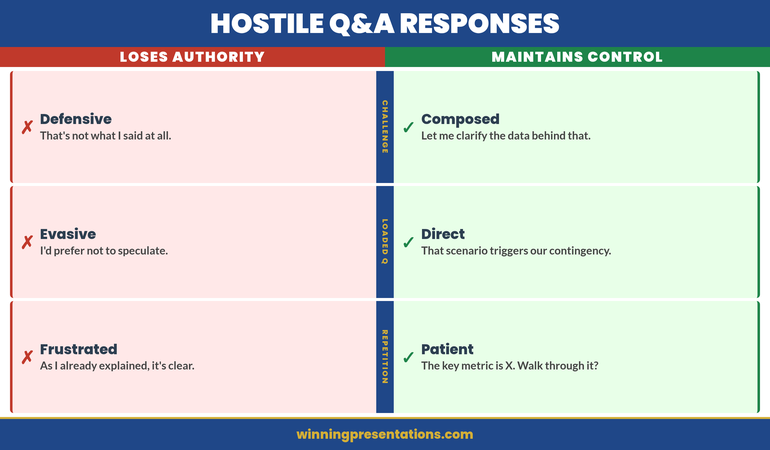
How to Handle Difficult Questions in a Presentation: The 4-Part Executive System

The CFO leaned forward. “What’s the ROI, and how confident are you in that number?”

I knew the answer. I’d calculated it myself. But in that moment — with twelve executives watching — my mind went blank. I started talking. And talking. Sixty seconds of rambling later, I could see the energy draining from the room.

We lost the deal. Not because of the presentation. The deck was solid. The strategy was sound. We lost it in Q&A, in the space between a reasonable question and an answer that never quite landed.

That was fifteen years ago. Since then, I’ve helped hundreds of executives prepare for exactly these moments — the high-stakes questions that can make or break a decision. What I’ve learned: handling difficult questions is a skill, not a talent. And it’s entirely learnable.

Quick answer: Handle difficult presentation questions using the 4-part system: Forecast the questions before the meeting, Build executive-ready answers using the Headline → Reason → Proof → Close framework, Control the room with bridging phrases and deliberate pacing, and Protect the decision by capturing open loops. Most presenters fail in Q&A because they prepare their slides but not their answers.

Here’s what nobody tells you about executive presentations: the deck is the easy part. You control the narrative. You choose the sequence. You decide what to emphasise and what to minimise.

Q&A is different. Someone asks a question you didn’t anticipate. The room shifts. Suddenly you’re not presenting — you’re defending. And if you don’t have a system for handling that moment, even the best presentation can unravel in sixty seconds.

I’ve watched it happen to brilliant people. Subject matter experts who know their content cold but freeze when challenged. Senior leaders who’ve delivered the same presentation a dozen times but still dread the questions at the end.

The good news: there’s a system that works. I’ve used it myself and taught it to executives facing boards, investors, regulators, and hostile stakeholders. It doesn’t require you to predict every question. It requires you to be ready for any question.

Why Q&A Derails Good Presentations

Most presentation training focuses on delivery. Slide design. Story structure. Eye contact. Voice modulation. All important — but all useless if you lose the room in the last ten minutes.

Q&A derails presentations for predictable reasons:

You answer the question you heard, not the question they asked. Executive questions often have subtext. “What’s the timeline?” might really mean “I’m worried this will slip.” If you answer only the surface question, you miss the real concern.

You go too detailed. When challenged, the instinct is to prove you know your stuff. So you dive into methodology, caveats, edge cases. The executive wanted a 20-second answer. You gave them two minutes. Their eyes glaze over. Your credibility drops.

You get defensive. A sharp question feels like an attack. Your body language shifts. Your tone hardens. Now you’re in a confrontation instead of a conversation. Even if you “win” the exchange, you’ve lost the room.

You ramble while thinking. You don’t know the answer immediately, so you start talking to fill the silence. The longer you talk without landing somewhere, the less confident you appear.

You let one question derail the agenda. Someone asks about a tangent. You engage fully. Twenty minutes later, you’ve never returned to your core message, and the decision you needed hasn’t been made.

Every one of these failures is preventable. Not with more subject matter expertise — with a system.

The 4-Part System That Keeps You in Control

After years of coaching executives through high-stakes Q&A, I’ve distilled the approach into four parts. Each takes 10-20 minutes of preparation. Together, they transform how you handle difficult questions.

Part 1: Forecast the Questions (10 minutes)

Before every high-stakes presentation, spend 10 minutes forecasting the questions that could kill your decision.

Not every possible question — the dangerous ones. The questions that, if answered badly, will derail the meeting.

These cluster into six categories:

  • Money: “What’s the ROI?” / “Why is this the best use of budget?” / “What happens if costs overrun?”
  • Risk: “What could go wrong?” / “What’s your contingency?” / “Why should we believe this will work?”
  • Priorities: “Why this over other initiatives?” / “What are we saying no to?”
  • Time: “Why now?” / “What if we wait six months?” / “Can this be done faster?”
  • People: “Do we have the capability?” / “Who’s accountable?” / “What about the team impact?”
  • Credibility: “How do you know?” / “What’s this based on?” / “Who else has done this?”

Write down the 5-10 questions most likely to come from your specific audience. If you’re presenting to a CFO, weight toward Money and Risk. If you’re presenting to a board, weight toward Credibility and Priorities.

🎯 Get the Complete Q&A Preparation System

The Executive Q&A Handling System includes a question forecasting framework, a library of 50+ executive challenge questions organised by category, and a one-page prep sheet you can use before every high-stakes meeting. Stop dreading Q&A — start controlling it.

Get the Executive Q&A Handling System → £39

Instant download. Use it for your next presentation.

Part 2: Build Executive Answers (20 minutes)

For each forecasted question, write a headline answer using this framework:

Headline → Reason → Proof → Close

This structure keeps your answers between 20-45 seconds — long enough to be substantive, short enough to maintain attention.

Example question: “What’s the ROI and how confident are you?”

Headline: “We project 3.2x return within 18 months.”

Reason: “That’s based on conservative estimates of cost reduction in three areas.”

Proof: “We’ve validated these numbers with Finance and they align with what we saw in the pilot.”

Close: “I’m confident in the methodology. Happy to walk through the assumptions if helpful.”

Total time: 30 seconds. The executive got a clear answer, understood the basis, and has an option to go deeper if they want.

Write these out. Don’t just think them through — write them. The act of writing forces clarity. When the question comes live, you won’t remember the exact words, but you’ll remember the structure.

Part 3: Control the Room (Live)

When you’re in the room, three techniques keep you in control:

Pause before answering. A 2-3 second pause signals confidence, not uncertainty. It shows you’re considering the question rather than reacting to it. This is counterintuitive — most people rush to fill silence — but it transforms how you’re perceived.

Use bridging phrases. When a question is hostile or off-topic, bridge back to your message:

  • “That’s an important consideration. The way we’ve addressed it is…”
  • “I understand the concern. What I’d focus on is…”
  • “That’s worth exploring. Before we do, let me make sure we’ve covered…”

These phrases acknowledge the question without letting it hijack the conversation.

Park questions safely. Not every question needs an immediate answer. “I want to give that the attention it deserves. Can I come back to you with a fuller answer by Friday?” This is not weakness — it’s professionalism.

The Executive Q&A Handling System includes a complete library of bridging phrases and control techniques for live Q&A situations.

Part 4: Protect the Decision (After Q&A)

Q&A doesn’t end when the meeting ends. Questions create open loops — concerns raised, information promised, follow-ups needed. If these aren’t captured, decisions drift.

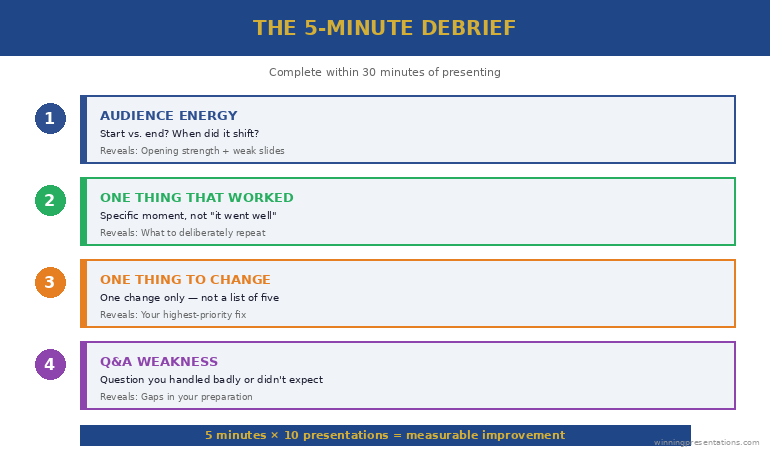
Within 24 hours of every high-stakes presentation, send a brief follow-up:

  • Questions raised and answers provided
  • Open items with owners and deadlines
  • Clear next steps toward the decision

This isn’t administrative busywork. It’s decision protection. It shows you’re organised, reliable, and driving toward action — exactly the qualities that make executives say yes.


4-part Q&A handling system showing Forecast, Build, Control, Protect framework

The 7 Question Types Executives Ask

Once you recognise the patterns, executive questions become predictable. Here are the seven types you’ll encounter most often:

1. The ROI Challenge: “What’s the return?” / “Justify this investment.” / “Why is this worth the money?”

2. The Risk Probe: “What could go wrong?” / “What’s your contingency?” / “What if this fails?”

3. The Trade-off Question: “Why this over X?” / “What are we not doing if we do this?” / “Is this the best option?”

4. The Timing Question: “Why now?” / “Can we wait?” / “Is this urgent?”

5. The Capability Question: “Can we actually do this?” / “Do we have the skills?” / “Who’s going to deliver?”

6. The Evidence Question: “How do you know?” / “What’s this based on?” / “Where’s the data?”

7. The Political Question: “Who else supports this?” / “What does [stakeholder] think?” / “Is this aligned with [initiative]?”

Before any high-stakes presentation, scan your content through these seven lenses. Where are you weakest? That’s where the tough questions will come.

📋 50+ Executive Challenge Questions — Ready to Use

The Executive Q&A Handling System includes a curated library of tough questions organised by category: Money, Risk, Trade-offs, Timing, Capability, Evidence, and Politics. Use it to stress-test every presentation before you deliver it.

Get the Executive Q&A Handling System → £39

Instant download. Includes response frameworks for each question type.

The Response Framework That Works Every Time

The Headline → Reason → Proof → Close framework works for most questions. But some situations need variations:

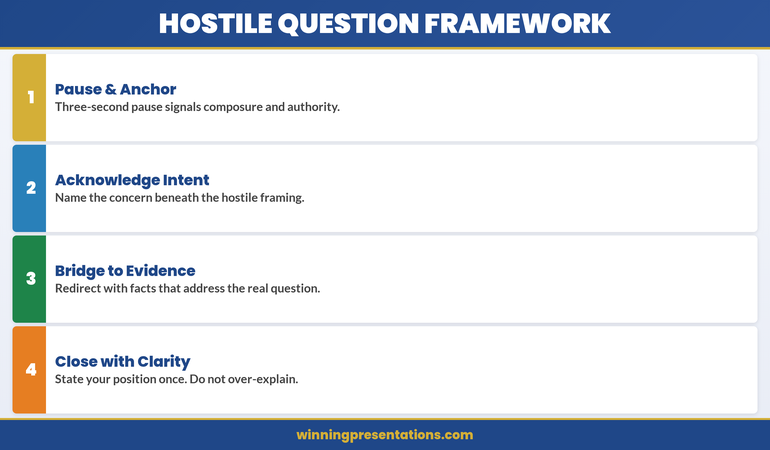
For Hostile Questions

When the tone is sharp or the question feels like an attack:

Acknowledge → Reframe → Answer → Bridge

“I understand why that’s a concern [acknowledge]. The way I’d frame it is [reframe]. Here’s what we’re doing [answer]. What matters most for this decision is [bridge].”

This defuses tension without being defensive. You’re not fighting the questioner — you’re redirecting the conversation.

For Complex Questions

When a question has multiple parts or requires nuance:

Clarify → Chunk → Answer → Check

“Let me make sure I understand — you’re asking about X and Y? [clarify] I’ll take those separately [chunk]. On X… On Y… [answer] Does that address what you were looking for? [check]”

Breaking complex questions into parts prevents rambling and ensures you actually answer what was asked.

For Questions You Weren’t Expecting

When something comes from left field:

Pause → Acknowledge → Partial Answer → Commit

“[Pause] That’s not something I’d considered from that angle [acknowledge]. My initial thought is [partial answer]. Let me give that more thought and come back to you with a fuller response by [date] [commit].”

This is far better than making something up or rambling while you think.

The response frameworks in the Executive Q&A Handling System include annotated examples for each situation — CFO scrutiny, risk challenges, political questions, and more.

How to Handle “I Don’t Know” Moments

The question every presenter dreads: what if you genuinely don’t know the answer?

First, recognise that this isn’t failure. No one knows everything. The executives asking questions don’t expect omniscience. What they do expect is honesty, competence, and follow-through.

Here’s how to handle it:

Don’t bluff. Executives detect BS instantly. A made-up answer destroys credibility far more than admitting uncertainty. If you don’t know, don’t pretend you do.

Don’t over-apologise. “I don’t know” is fine. “I’m so sorry, I really should know this, I can’t believe I don’t have that information” is weak. State it simply and move on.

Offer what you do know. “I don’t have the exact figure, but I know it’s in the range of X to Y based on [source]. I’ll confirm the precise number and send it by end of day.”

Commit to a specific follow-up. “Let me find out and get back to you by [specific time].” Then actually do it. Reliable follow-through builds more credibility than knowing everything on the spot.

Use the room. Sometimes the answer is in the room. “I don’t have that detail — Sarah, do you know?” This shows collaboration, not weakness.

The magic phrase: “I want to give you an accurate answer rather than a quick one. Let me confirm and get back to you.”

What Changes When You Have a System

I recently worked with a VP preparing for a board presentation. She’d delivered the same content twice before — and both times, Q&A had gone sideways. The board had concerns she couldn’t address cleanly, and the decision kept getting deferred.

We spent 90 minutes applying this system. We forecasted the likely questions (six of them, mostly in the Risk and Capability categories). We wrote headline answers for each. We practised bridging phrases for the one board member who always went off-topic.

The third presentation took 25 minutes. Q&A took 15 minutes. She answered every question in 30-45 seconds, using the frameworks. The decision was approved that day.

Same presenter. Same content. Same board. Different result — because she had a system.

🎯 Handle Tough Questions Like a Senior Leader

The Executive Q&A Handling System gives you everything you need to prepare for and control high-stakes Q&A: question forecasting frameworks, response templates, bridging phrases, a one-page prep sheet, and a decision capture sheet. Stop losing momentum in Q&A.

Get the Executive Q&A Handling System → £39

Instant download. A reusable system you’ll use for every high-stakes meeting.

If you also need deck templates: the Executive Slide System (£39) pairs well with Q&A preparation.

Frequently Asked Questions

How much time should I spend preparing for Q&A?

For a high-stakes presentation, spend 30-45 minutes on Q&A preparation: 10 minutes forecasting questions, 20 minutes writing headline answers, and 5-10 minutes reviewing bridging phrases. This investment pays off dramatically. Most presenters spend hours on slides and zero time on Q&A — then wonder why they lose momentum at the end.

What if someone asks a question I haven’t prepared for?

Use the Pause → Acknowledge → Partial Answer → Commit framework. A 2-3 second pause buys thinking time. Acknowledge the question is valid. Give the best partial answer you can. Commit to a specific follow-up if needed. This handles 90% of unexpected questions professionally.

How do I handle a questioner who’s clearly hostile?

Use Acknowledge → Reframe → Answer → Bridge. Don’t get defensive — it never helps. Acknowledge their concern as valid, reframe to the substance of the issue, give a clear answer, then bridge back to your core message. Stay calm, maintain eye contact, and keep your voice steady. Hostility often dissolves when met with professionalism.

Should I take questions during the presentation or save them for the end?

For executive audiences, it’s usually better to take questions as they arise — executives don’t like waiting. But set a boundary: “I’m happy to take questions as we go. If something requires a longer discussion, I’ll note it and we’ll come back to it at the end.” This keeps you in control while respecting their time.

📬 The Winning Edge Newsletter

Weekly frameworks for executive presentations and high-stakes communication. Join senior professionals who receive actionable techniques every week.

Subscribe free →

Related: If difficult questions trigger physical anxiety — racing heart, shallow breathing, mind going blank — the techniques in The Fight or Flight Hack I Learned From Hypnotherapy can help you stay calm under pressure.

You can have a perfect deck and still lose the room in Q&A. The difference between presenters who maintain control and those who don’t isn’t subject matter expertise — it’s preparation and system.

Forecast the questions. Build executive answers. Control the room with deliberate technique. Protect the decision with clear follow-through.

The next tough question doesn’t have to derail you. You just need a system.

About the Author

Mary Beth Hazeldine is the Owner & Managing Director of Winning Presentations. With 24 years of corporate banking experience, she has faced — and helped clients prepare for — high-stakes Q&A sessions with boards, investors, regulators, and senior leadership teams.

A qualified clinical hypnotherapist and NLP practitioner, Mary Beth combines executive communication expertise with evidence-based techniques for staying calm under pressure. She has trained thousands of executives in presentation skills and Q&A preparation.

20 Jan 2026
Executive presentation framework that AI can't replace - the human judgment layer that turns slides into decisions

Executive Presentation Framework: What AI Can’t Replace (And Never Will)

Quick answer: An executive presentation framework is the strategic thinking layer that determines what to say, in what order, to which audience, for what decision. AI tools can generate slides, but they cannot read the room, build your credibility, or structure content for your specific stakeholders’ decision-making style. The framework is what makes AI useful—not the other way around.

Master the framework, and AI becomes a powerful accelerator. Skip the framework, and AI produces polished slides that get polite nods and no action.

⚡ Before you open any AI tool, answer these 4 framework questions:

1. Decision: What specific decision or action do I need from this audience?

2. Objection: What’s their biggest concern or resistance?

3. Evidence: What proof will overcome that specific objection?

4. Structure: What order puts my strongest point where it matters most?

Now prompt AI with these answers. Watch the output transform.

The Presentation That AI Made Worse

A VP at a tech company came to me after a failed board presentation. She’d used every AI tool available—Copilot for the slides, ChatGPT for the script, Gamma for the visuals. The deck was beautiful.

The board said no.

“I don’t understand,” she told me. “The slides were better than anything I’ve made before.”

I reviewed the deck. She was right—the slides were polished. But the structure was wrong. She’d built up to her recommendation over 20 slides when the board wanted her position in the first 60 seconds. She’d included data that addressed her concerns, not theirs. She’d structured it for herself, not for how her CFO actually makes decisions.

AI had made her faster at building the wrong presentation.

That’s the trap nobody talks about.

⭐ Master the Framework That Makes AI Actually Useful

Stop producing polished slides that get polite nods. Learn the executive presentation methodology that turns AI from “fast but generic” into “fast and compelling.”

In this live cohort course:

  • The Decision-First Framework for executive audiences
  • How to read your stakeholders’ decision-making style
  • Structuring for your specific audience (not generic “best practices”)
  • Live feedback on your actual presentations

Includes a Decision-First briefing template you can reuse before every deck.

Join AI-Enhanced Presentation Mastery →

Live cohort with Mary Beth Hazeldine. 70% framework thinking, 30% AI execution. Works with any tool—Copilot, Gamma, ChatGPT, or whatever comes next.

If you have a board presentation or investor pitch in the next month, this will transform how it lands.

The 3 Things AI Cannot Do (And Never Will)

AI is extraordinarily good at certain tasks. It can generate slide layouts, suggest visual designs, produce draft content quickly, and format information cleanly.

But there are three capabilities at the heart of effective executive presentations that AI fundamentally cannot perform—and these aren’t limitations that will be solved with the next model update.

1. AI cannot read the room.

Executive presentations succeed or fail based on real-time audience response. The CFO who leans back when you mention the budget. The board member who checks their phone during your risk slide. The CEO who nods slightly at your third point.

These signals tell you what to emphasise, what to skip, and when to pivot. AI can’t see them. AI can’t adjust. AI doesn’t know that your COO makes decisions emotionally and justifies them rationally, while your CFO does the opposite.

You do. That’s the framework.

2. AI cannot build your credibility.

When you present to executives, they’re not just evaluating your slides. They’re evaluating you. Your command of the material. Your ability to answer unexpected questions. Your judgment about what matters.

AI can give you beautiful slides, but it can’t make you credible. When a board member asks “What happens if this fails?” and you give a thoughtful, unrehearsed answer that shows deep understanding—that’s what gets buy-in. That comes from framework thinking, not AI prompting.

3. AI cannot structure for your specific decision-maker.

Generic presentation advice says “lead with your conclusion” or “tell a story.” But your CFO might want numbers first and narrative second. Your CEO might want strategic context before tactical recommendations. Your board might want risk assessment before opportunity analysis.

AI produces average structures for average audiences. Your executive presentation framework must be tailored to how your specific stakeholders process information and make decisions. That’s human judgment. It always will be.


The three things AI cannot do in executive presentations: read the room, build credibility, and structure for specific decision-makersWhat an Executive Presentation Framework Actually Is

A framework isn’t a template. Templates are fill-in-the-blank structures that produce generic results. A framework is a decision-making methodology that produces tailored results.

The Decision-First Framework has four components:

Component 1: Decision clarity

Before anything else, define the specific decision you need. Not “inform them about the project” but “get approval for the £200K Phase 2 budget.” This clarity shapes everything that follows—what to include, what to cut, and how to structure the flow.

Component 2: Audience analysis

Who’s in the room? What are their concerns? How do they prefer to receive information? A framework helps you map each stakeholder’s decision-making style, objections, and priorities—then structure your content accordingly.

Component 3: Evidence selection

You have more data than you can present. A framework helps you select the evidence that specifically addresses your audience’s concerns—not the data that’s most impressive to you. This is where most AI-generated presentations fail: they include everything rather than selecting strategically.

Component 4: Structure optimization

The order of information matters enormously. A framework tells you whether to lead with recommendation or build to it, whether to address objections early or late, and where to place your strongest evidence for maximum impact. Learn more about executive presentation structure and how decision-first ordering works.

When you have this framework clear, AI becomes powerful. You’re not asking AI to think—you’re asking AI to execute your thinking faster. That’s the multiplier effect.

Want to master framework-first presentation thinking? AI-Enhanced Presentation Mastery teaches the complete Decision-First Framework with live practice on your actual presentations. See upcoming cohorts →

Framework as Multiplier: Why AI Needs You More Than You Need It

Here’s the uncomfortable truth about AI presentation tools: they multiply what you put in.

If you put in vague thinking, you get polished vagueness. If you put in generic structure, you get beautiful generic slides. If you put in framework-quality input—clear decision, specific audience analysis, selected evidence, optimized structure—you get executive-quality output at unprecedented speed.

Without framework:

“Create a presentation about our Q3 results for the board”

→ AI produces a generic quarterly review that looks like every other quarterly review the board has seen this month

With framework:

“Create a 6-slide presentation requesting £500K for market expansion. Board’s main concern is timeline risk. Lead with our mitigation plan, then show the opportunity cost of delay. CFO needs IRR and payback period on slide 3.”

→ AI produces a targeted, decision-ready deck tailored to your specific board’s priorities

Same AI. Same topic. Completely different output. The variable is the framework thinking you bring.

This is why I teach 70% framework, 30% AI tools. The framework is the skill. The AI is just the accelerator. If you have a solid AI presentation workflow, it’s because you have solid framework thinking underneath it.


Framework-first versus prompt-first approach showing how strategic thinking transforms AI output quality

⭐ The Framework That Makes Every AI Tool More Powerful

Learn the methodology that transforms AI from “fast at generic” to “fast at excellent.” Works with Copilot, Gamma, ChatGPT—or whatever tool comes next.

What you’ll master:

  • The 4-component Decision-First Framework
  • How to analyze any audience’s decision-making style
  • Evidence selection that addresses real objections
  • Structure optimization for executive buy-in

Join the Next Cohort →

Live sessions + direct feedback on your presentations. Framework skills that last a career.

This pays for itself the first time you get buy-in instead of polite nods.

Future-Proofing Your Presentation Skills

AI tools will keep improving. Copilot will get smarter. New competitors will launch. Models will advance.

But the executive presentation framework skills—reading your audience, building credibility, structuring for specific decision-makers—will remain human skills. They’re future-proof because they’re based on how humans make decisions, not on how technology generates content.

What becomes more valuable as AI improves:

  • Judgment about what to include — AI can generate anything; knowing what matters is human
  • Understanding of specific stakeholders — AI knows averages; you know your CFO
  • Ability to adapt in real-time — AI can’t see the room; you can read it
  • Credibility through deep knowledge — AI can script answers; you can think on your feet

What becomes less valuable:

  • Slide design skills (AI handles this well)
  • Content drafting speed (AI is faster)
  • Formatting consistency (AI is better)

The executives who thrive will be those who invest in the human judgment layer—the framework—and use AI to accelerate execution. Those who rely on AI for thinking will produce faster mediocrity.

The 3Ps Framework I’ve developed over 24 years in banking has helped clients raise more than £250M in funding. That wasn’t because of technology. It was because of strategic thinking applied to specific audiences.

Ready to build AI-proof presentation skills? AI-Enhanced Presentation Mastery teaches framework-first thinking that works with any tool and lasts a career. View course details →

Related: Framework thinking applies to every aspect of executive presentations. See how it shapes your executive presentation opening line and how it helps you manage high-stakes presentation nerves.

Common Questions About Executive Presentation Frameworks

What is an executive presentation framework?

An executive presentation framework is a decision-making methodology for structuring presentations to senior leaders. It includes four components: clarifying the specific decision you need, analyzing your audience’s concerns and decision-making style, selecting evidence that addresses their objections, and optimizing the structure for maximum impact. Unlike a template (fill-in-the-blank), a framework produces tailored results for each unique situation.

Can AI create executive presentations?

AI can create slides, but it cannot create effective executive presentations. The difference is judgment—knowing what to include, understanding your specific stakeholders, reading the room during delivery, and building credibility through deep knowledge. AI produces average content for average audiences. Executive presentations require tailored thinking that AI cannot perform. AI is best used to accelerate execution after you’ve done the framework thinking.

What makes executive presentations different?

Executive presentations are decision-focused, not information-focused. Senior leaders don’t want to learn about your topic—they want to make a decision and move on. This requires leading with recommendations, addressing specific objections, and structuring for their decision-making style rather than your preference. Generic presentation advice often fails with executives because it assumes audiences want information rather than clarity for action.

⭐ Build the Skill AI Can’t Replace

Framework thinking is the competitive advantage that makes AI useful. Learn the methodology that executives trust—and that technology can’t replicate.

Inside the course:

  • The complete Decision-First Framework
  • Audience analysis techniques for any stakeholder
  • How to brief AI for executive-quality output
  • Live practice with direct feedback

Enroll in AI-Enhanced Presentation Mastery →

Live cohort format with Mary Beth Hazeldine. Framework-first methodology developed from 24 years in corporate banking and executive coaching.

FAQ

Will AI replace presentation skills?

AI will replace some presentation tasks—slide design, content drafting, formatting—but not presentation skills. The human judgment layer (reading audiences, building credibility, structuring for specific decision-makers, adapting in real-time) remains irreplaceable because it depends on understanding specific people in specific contexts. Professionals who invest in framework thinking will use AI as an accelerator. Those who rely on AI for thinking will produce faster mediocrity.

What framework do consultants use for executive presentations?

Top consulting firms use variations of the Pyramid Principle—leading with the answer, then supporting with evidence. But the specific framework matters less than the underlying skill: analyzing your audience, clarifying the decision, selecting relevant evidence, and optimizing structure. Generic frameworks fail when applied without adaptation. The skill is knowing how to tailor any framework to your specific stakeholders.

How long does it take to learn a presentation framework?

The concepts can be learned in a few hours. Applying them fluently takes practice—typically 4-6 presentations with conscious framework application. Most professionals see improvement immediately (clearer structure, better audience response) and mastery within 2-3 months. The goal isn’t memorizing steps; it’s developing judgment that becomes automatic.

Does this work with Copilot/Gamma/ChatGPT?

Yes—the framework is tool-agnostic. Framework thinking improves your output from any AI tool because it improves your input. The specific prompting syntax varies slightly by tool, but the underlying methodology (decision clarity, audience analysis, evidence selection, structure optimization) applies universally. Learn the framework once, use it with whatever technology emerges.

📧 The Winning Edge Newsletter

Weekly insights on framework-first presentation thinking, AI-enhanced workflows, and executive communication. Practical methodology from 24 years in corporate banking—no AI hype, just what actually works with senior leaders.

Subscribe Free →

Your Next Step

AI generates slides. Frameworks generate buy-in.

Before your next executive presentation, spend 10 minutes on framework thinking: What decision do you need? What’s your audience’s main concern? What evidence addresses it? What structure puts your strongest point where it matters most?

Then use AI to execute your thinking. The output will transform—because you’ve transformed the input.

For the complete framework methodology with live practice and direct feedback, join AI-Enhanced Presentation Mastery.

About the Author

Mary Beth Hazeldine is the Owner & Managing Director of Winning Presentations and a former corporate banker with 24 years of experience at JPMorgan Chase, PwC, Royal Bank of Scotland, and Commerzbank. She has trained thousands of executives on high-stakes presentation skills and helped clients secure more than £250 million in funding and budget approvals.

Mary Beth is also a qualified clinical hypnotherapist and NLP practitioner. She developed the framework-first methodology after watching countless executives struggle with polished AI slides that failed to get buy-in—and discovering that the missing piece was always strategic thinking, never better technology.

Book a discovery call | View services

16 Jan 2026
Client presentation skills framework showing useful vs impressive approach

Client Presentation Skills: Why ‘Impressive’ Loses and ‘Useful’ Wins Every Time

Quick Answer: The most effective client presentation skills focus on being useful rather than impressive. Clients don’t want to be dazzled—they want clarity on how you’ll solve their problem. Structure every slide around their decision, not your credentials. Lead with the answer, support with evidence, and close with clear next steps.

Three years ago, I watched a client presentation that should have been a slam dunk turn into a disaster.

The consulting firm had spent 47 hours perfecting their deck. Custom animations. Cinematic transitions. A video that cost more than my first car. Their credentials section alone was 12 slides of logos, awards, and testimonials.

The client—a FTSE 100 CFO—sat through all 58 slides without interrupting. When the lights came up, she asked one question: “Can you tell me specifically how this solves my inventory problem?”

Silence. The presenters looked at each other. They’d been so focused on being impressive that they’d buried the actual solution on slide 47.

The firm didn’t win that contract. A smaller competitor did—with a 9-slide deck that started with the client’s exact problem and ended with a clear implementation plan.

I know because I helped that smaller firm prepare their pitch.

After 24 years in corporate banking at JPMorgan Chase, PwC, RBS, and Commerzbank—and training over 5,000 executives on high-stakes presentations—I’ve seen this pattern repeat hundreds of times. The teams that try to impress almost always lose to the teams that choose to be useful.

This article will show you exactly why, and how to develop client presentation skills that actually close business.

⭐ Steal the Exact Slide Structure That Closes Client Deals

The best salespeople don’t convince—they structure. Get the plug-and-play frameworks that guide prospects to yes.

What’s inside:

  • The 9-slide client pitch framework
  • “No-Brainer Calculation” ROI template
  • Implementation timeline layouts

📊 Preview: Problem slide → Recommendation → ROI calculation → Implementation timeline → Next steps

“This turned our deck into a decision document overnight.” — Management Consultant, London

Used by executives in banking, consulting, and corporate finance to win time-critical pitches.

Built from frameworks behind £250M+ in funded pitches. Aggregate outcomes across multiple client pitches and funding rounds.

Download the Client Pitch Deck Templates → £39

Built for people who need a client pitch deck in the next 72 hours.

The ‘Impressive’ Trap That Kills Client Presentations

Here’s an uncomfortable truth I’ve learned from watching thousands of client presentations fail: being impressive is actually a defence mechanism.

When you’re unsure whether your solution truly fits the client’s needs, you compensate with credentials. When you haven’t done enough discovery, you hide behind animations. When you’re anxious about the outcome, you add more slides showing how brilliant your company is.

The problem? Clients see through it instantly.

Research cited by Corporate Visions (via Forrester) shows executive buyers strongly favour the seller who delivers value and insight early—not the one with the most impressive presentation. Clients aren’t sitting in your meeting thinking, “Wow, that transition was smooth.” They’re thinking, “Does this solve my problem or not?”

What makes a good client presentation?

A good client presentation leads with the client’s specific problem, presents a clear recommendation within the first few minutes, and closes with concrete next steps. It prioritises usefulness over impressiveness.

The Impressive Presentation Pattern

Most client presentations follow the same doomed structure:

  • Slides 1-5: Company history and credentials
  • Slides 6-15: Services overview (all of them, just in case)
  • Slides 16-25: Case studies (impressive ones, naturally)
  • Slides 26-35: Team bios and qualifications
  • Slides 36-40: Finally, something about the client’s actual situation
  • Slides 41-50: Methodology (in exhaustive detail)
  • Slide 51: Pricing
  • Slide 52: Questions?

By the time you reach the client’s actual problem, they’ve mentally checked out. Their attention peaked in the first three minutes—and you wasted it on your founding story.

Why “Impressive” Feels Safe (But Isn’t)

I understand the instinct. When I started presenting at PwC, I did exactly the same thing. My first major client pitch included a 15-minute section on our global footprint. I thought it showed credibility.

What it actually showed was that I didn’t understand what the client needed to make a decision.

The client didn’t care that PwC had offices in 157 countries. They cared whether we could fix their supply chain issue before Q4.

Comparison chart showing useful vs impressive client presentation approaches

What Clients Actually Want (It’s Not What You Think)

After sitting through more than 500 client presentations on the buying side during my banking career, I can tell you exactly what goes through a client’s mind:

“Get to the point. Help me make a decision. Don’t waste my time.”

That’s it. That’s what every client wants from every presentation. Everything else—the rapport building, the credibility establishing, the relationship developing—is secondary.

The 4 Questions Every Client Is Silently Asking

While you’re presenting, your client is running an internal checklist:

  1. Do they understand my specific situation? Not a generic version of my industry—MY situation, with MY constraints and MY priorities.
  2. Is their solution actually right for us? Not a solution they’ve sold to others—one that fits what we need.
  3. Can I trust them to deliver? Not impressive credentials—evidence they can execute.
  4. What happens next? Not a vague “we’ll be in touch”—a clear path forward.

Notice what’s missing? They’re not asking about your founding story. They’re not wondering how many awards you’ve won. They’re not impressed by your global headcount.

They’re asking: “Can this person solve my problem?”

How long should a client presentation be?

Most client presentations should be 15-20 minutes followed by discussion—typically 9-12 slides. Shorter presentations that hit every key point beat longer ones that lose audience attention.

The Shift from Impressive to Useful

When I work with clients on their client presentation skills, the first thing we do is flip the entire structure. Instead of building toward the solution, we lead with it.

Here’s how the same content looks when reorganized around usefulness:

  • Slide 1: The client’s specific problem (proving you understand)
  • Slide 2: Your recommended solution (the answer they came for)
  • Slide 3: Why this approach (supporting evidence)
  • Slides 4-6: How it works (implementation clarity)
  • Slide 7: What you’ll deliver (specific outcomes)
  • Slide 8: Investment required (pricing in context)
  • Slide 9: Next steps (clear path forward)

Credentials? They’re in an appendix—available if the client asks, invisible if they don’t.

This structure respects the client’s time and signals confidence. You’re saying: “I understand your problem so well that I can cut straight to the solution.”

The Useful Framework: 5 Pillars of Client Presentations That Win

After years of testing and refining, I’ve identified five pillars that separate client presentations that close from those that don’t.

Pillar 1: Lead with Their Problem, Not Your Credentials

Your opening slide should reflect the client’s world back to them. Not a generic industry challenge—their specific situation.

I had a client preparing to pitch a major retailer. Their original opening was: “About Our Agency: 15 Years of Retail Excellence.”

We changed it to: “Your Checkout Abandonment Problem: 34% of Customers Leave at Payment.”

The client leaned in immediately. Why? Because we’d shown in five seconds that we understood exactly what was keeping them up at night.

The rule: Your first slide should include at least one number specific to the client’s situation. If you can’t find one, you haven’t done enough discovery.

Pillar 2: Answer First, Explain Second

Most presenters build suspense: background, analysis, options, then finally the recommendation. Clients hate this.

They’re thinking: “Just tell me what you think I should do.”

The Pyramid Principle, pioneered at McKinsey, puts the answer first. You state your recommendation, then support it with evidence. This isn’t just more efficient—it builds trust.

When you hide your recommendation until the end, clients wonder what you’re hiding. When you lead with it, they see confidence.

Pillar 3: Show Implementation, Not Just Strategy

Strategy slides are cheap. Every consultant can create them. What clients pay for is execution.

A VP of Operations once told me: “I’ve seen 50 presentations that diagnosed my problem perfectly. I’ve seen two that convinced me the presenter could actually fix it.”

Your presentation needs to show the “how” as clearly as the “what.” This means:

  • Specific timelines with milestones
  • Named team members (not just roles)
  • Dependencies and risk mitigation
  • Communication and reporting cadence

The more concrete your implementation section, the more real your solution feels.

💡 Want the exact implementation slide layouts? The Executive Slide System includes ready-to-use implementation and timeline templates.

Client presentation implementation framework showing timeline and milestones

Pillar 4: Make the ROI Impossible to Ignore

Every client presentation should include a slide I call the “No-Brainer Calculation.”

This slide shows, in simple maths, why your solution is worth the investment. Not vague benefits—specific, calculated returns.

Example:

“Your current checkout abandonment rate costs £2.4M annually. Our solution has reduced abandonment by 23% for similar retailers. A 23% reduction = £552K annual revenue recovery. Our fee: £180K. Payback period: 4 months.”

When clients can see their own numbers in your calculation, the decision becomes obvious.

💡 Need the ROI calculation template? The Executive Slide System includes the “No-Brainer Calculation” slide layout ready to customise.

Pillar 5: Close with Momentum, Not Questions

The worst way to end a client presentation: “Any questions?”

This hands control to the room, invites objections, and creates uncertainty about what happens next.

The better approach: close with specific next steps and immediate action.

“Based on what we’ve discussed, here’s what I propose: We’ll send the detailed scope document by Thursday. You’ll review with your team and come back to us with any modifications by the following Tuesday. We can have the kickoff scheduled for February 1st. Does that timeline work for your team?”

Notice: you’re not asking IF they want to proceed. You’re asking WHEN.

This isn’t aggressive—it’s useful. You’re making their life easier by proposing the path forward.

How to Structure a Client Presentation That Closes

Let me give you the exact structure I use with clients who need to win competitive pitches.

The 9-Slide Client Presentation Framework

Slide 1: Their Problem (with specifics)
“Your inventory carrying costs have increased 34% over 18 months while turns have decreased.”

Slide 2: Your Recommendation
“We recommend implementing a demand-sensing system integrated with your existing ERP.”

Slide 3: Why This Approach
3-4 bullet points explaining why this solution fits their specific situation.

Slide 4: How It Works (Overview)
Visual showing the system architecture or process flow.

Slide 5: Implementation Timeline
Clear milestones: Week 1, Month 1, Month 3, Go-Live.

Slide 6: Expected Outcomes
Specific, measurable results: “15-20% reduction in carrying costs within 6 months.”

Slide 7: Investment Required
Pricing with context—show the ROI calculation here.

Slide 8: Why Us (One Slide Only)
2-3 proof points specific to this project. Not your whole history—just why you’re right for THIS.

Slide 9: Next Steps
Specific actions with dates and owners.

Appendix: Everything Else
Team bios, detailed methodology, additional case studies—available if asked.

This structure works because it respects the client’s time while giving them everything they need to make a decision. Learn more about persuasive presentation techniques that complement this framework.

⭐ Want This as a Ready-to-Use Client Pitch Deck?

If you’re building a client pitch this week, get plug-and-play slides so you’re not starting from scratch.

What’s inside:

  • The complete 9-slide client framework (ready to customise)
  • ROI “No-Brainer Calculation” template
  • Implementation timeline layouts

Get the Plug-and-Play Deck Frameworks → £39

What is the best structure for a client pitch?

The best client pitch structure leads with the client’s problem, presents your recommendation on slide 2, supports it with evidence and implementation details, then closes with pricing in context and specific next steps. Keep credentials in an appendix.

The First 30 Seconds

Your opening line sets the tone for everything that follows. Skip the pleasantries and get to value immediately.

Weak opening: “Thank you for having us today. We’re really excited to present our proposal. Before we dive in, let me tell you a bit about our company…”

Strong opening: “Your checkout abandonment rate is costing you £2.4 million annually. In the next 20 minutes, I’m going to show you exactly how we’ll cut that by at least 23%—and have it running before your Q4 peak.”

The strong opening passes the “So What?” test. The client immediately knows why this meeting matters.

For more on powerful openings, see how to start a presentation.

The 7 Client Presentation Mistakes That Lose Deals

I’ve watched brilliant solutions lose to mediocre competitors because of avoidable presentation mistakes. Here are the seven I see most often.

Mistake #1: Starting with Your Company History

The client doesn’t care about your founding story. They care about their problem. Every second you spend on your history is a second they’re mentally checking out.

Fix: Move all company information to an appendix. Only share it if the client asks.

Mistake #2: Generic Problem Framing

“Companies in your industry face digital transformation challenges.”

This tells the client nothing. It shows you’ve done surface-level research and are delivering a template presentation.

Fix: Use specific numbers from their situation. “Your customer acquisition cost has increased 47% over three years while lifetime value has stayed flat.”

Mistake #3: Too Many Options

Presenting three options seems helpful—”We’ll let them choose!”—but it actually creates decision paralysis.

Research by Sheena Iyengar shows that too many choices reduce decision-making confidence and increase the likelihood of choosing nothing.

Fix: Make a recommendation. Present one option with conviction. Mention alternatives briefly in the appendix.

Mistake #4: Burying the Price

Putting pricing on slide 47 of 52 signals that you’re nervous about it. Clients notice.

Fix: Present investment in context, early enough that you have time to discuss it. Frame it against the value delivered, not as a standalone number.

Mistake #5: Vague Next Steps

“We’d love to continue the conversation” isn’t a next step. It’s a platitude.

Fix: Propose specific actions with dates. “We’ll send the scope document by Thursday. Your review deadline would be the following Tuesday. Kickoff February 1st.”

Mistake #6: Reading the Slides

When you read your slides, you become redundant. The client can read faster than you can speak—so why are you there?

Fix: Your slides should be visual anchors, not scripts. Design them so they need you to explain them. For more on confident delivery, explore building presentation confidence.

Mistake #7: Ignoring the Decision-Maker

Sometimes the real decision-maker isn’t obvious. They might be the quietest person in the room.

Fix: Before your presentation, ask: “Who else will be involved in the decision?” During the presentation, watch for who others defer to. Address your key points to that person.

Common client presentation mistakes infographic with fixes

Case Study: From 23% Close Rate to 67% in 90 Days

Let me share a transformation that illustrates what’s possible when you shift from impressive to useful.

A management consultancy came to me after losing three major pitches in a row. Their presentations were polished—beautiful design, smooth delivery, comprehensive coverage of every service they offered.

The problem? They were winning only 23% of competitive pitches. Industry average was closer to 40%.

The Diagnosis

I sat through one of their dry-run presentations. Within five minutes, I understood the problem.

Their 44-slide deck spent the first 15 slides on company credentials. By the time they reached the client’s actual situation, we were 20 minutes into a 45-minute slot.

More critically, their recommendation was buried on slide 38. A client who lost focus—or had to leave early—would never reach it.

They were trying to impress their way to a contract. The clients weren’t buying it.

The Transformation

We restructured everything around the 9-slide framework I described earlier.

Original deck: 44 slides, credentials-first, recommendation on slide 38.

New deck: 9 slides, problem-first, recommendation on slide 2.

We moved their credentials section—all 15 slides of it—to an appendix. Their team was initially terrified. “But the client needs to know who we are!”

I reminded them: “The client already knows who you are. That’s why you’re in the room. What they don’t know is whether you understand their problem and can solve it.”

The Results

Over the next 90 days, they pitched seven new opportunities using the new structure.

Close rate: 67% (5 wins from 7 pitches).

Combined contract value: £3.2 million.

But here’s what surprised me: client feedback consistently mentioned how “refreshing” and “efficient” their presentations felt. Multiple prospects commented that it was the clearest proposal they’d received.

Being useful isn’t just more effective—it’s more appreciated.

What They Said

“The thing that changed everything was leading with the client’s numbers. Within 30 seconds, they knew we understood their situation. The rest of the presentation was just confirming what they already sensed: that we were the right choice.”

— Managing Director, the consultancy

⭐ Win the Pitch by Controlling the Decision

Most competitors show capability. You’ll show clarity, ROI, and execution—the things buyers actually decide on.

What’s inside:

  • Answer-first structure that builds trust fast
  • “No-Brainer Calculation” ROI slide template
  • Stakeholder framing for multi-buyer meetings

Download the Executive Slide Templates → £39

Frequently Asked Questions

How long should a client presentation be?

For most competitive pitches, aim for 15-20 minutes of presentation followed by discussion. This typically means 9-12 slides. Anything longer suggests you’re including content the client doesn’t need. Remember: shorter presentations that hit every key point beat longer presentations that lose audience attention. The goal is decision clarity, not comprehensive coverage.

Should I send the presentation before the meeting?

Generally no. Sending slides in advance removes your ability to control the narrative and lets competitors see your approach. If the client insists, send a 2-page executive summary instead—enough to confirm the meeting is worth their time, not enough to replace the meeting itself. Save the full deck for your live presentation where you can read reactions and adapt.

How do I handle multiple decision-makers with different priorities?

Map stakeholder priorities before the meeting and address them explicitly. Structure your presentation so each decision-maker hears their concern addressed directly: “For the finance team, here’s the ROI calculation… For operations, here’s the implementation impact…” This shows you understand the organisation’s complexity and have thought through implications for each stakeholder group.

What if I don’t have specific numbers for the client’s situation?

If you can’t find client-specific data, use industry benchmarks positioned as conversation starters: “Based on companies your size, we typically see X. During our discovery, we’ll validate this for your specific situation.” This demonstrates research effort while inviting the client to share their actual numbers. Often, they’ll correct you with more accurate data—which is exactly what you want.

How do I compete against larger, more established firms?

Focus on usefulness, not credentials. Large firms often rely on brand recognition and deliver template presentations. Your advantage is personalisation. A smaller firm that demonstrates deep understanding of the client’s specific situation will often beat a larger firm that treats them as one of hundreds of similar accounts. Lead with insight, not with size.

What’s the best way to handle pricing objections during the presentation?

Anchor the price to value before revealing it. Show the ROI calculation first: “This problem is costing you £X annually. Our solution delivers Y% improvement, which represents £Z in value.” Then present your price in that context. When clients see the value first, the price becomes a no-brainer rather than a negotiation point. Never apologise for your pricing—confidence in your value proposition is itself persuasive.

📧 Join 2,000+ professionals getting weekly presentation insights. Subscribe to The Winning Edge →

If you want the full slide frameworks (not just a checklist), the Executive Slide System turns this into ready-to-use decks.

📋 Free Resource: Sales Presentation Checklist

Before your next client presentation, run through this comprehensive checklist covering structure, messaging, and delivery. Includes the “No-Brainer Calculation” template and stakeholder mapping framework.

Download the Free Checklist →

Related Resources

Closing: Useful Wins. Every Time.

Remember that FTSE 100 CFO I mentioned at the start? The one who sat through 58 slides of impressive content?

She later told me what she was thinking during that presentation: “I kept waiting for them to tell me how they’d solve my problem. Instead, they told me about their awards.”

The firm that won her business—the one with 9 slides—understood something fundamental about client presentation skills: clients aren’t looking to be impressed. They’re looking for help.

Every slide you add that isn’t directly useful is a slide that risks losing your audience. Every credential you lead with is attention you could have spent on their problem. Every minute you spend impressing is a minute you’re not helping.

The best client presentations feel like conversations with a trusted advisor. They’re clear, direct, and focused entirely on the client’s success. They don’t try to dazzle—they try to be useful.

And useful, it turns out, is far more impressive than impressive ever could be.


About the Author

Mary Beth Hazeldine is a qualified clinical hypnotherapist, NLP practitioner, and Managing Director of Winning Presentations. After 5 years terrified of presenting, she built a 24-year banking career at JPMorgan Chase, PwC, RBS, and Commerzbank. She has treated hundreds of anxiety clients and trained over 5,000 executives.

This article was created with AI assistance; all stories and insights are based on 35 years of real client work.

15 Jan 2026
presentation rehearsal techniques - the right way to practice presentations without becoming robotic or losing authenticity

Presentation Rehearsal: Why 3 Hours of Practice Makes You Worse

Quick Answer: More rehearsal doesn’t mean better delivery. Over-practice creates robotic speakers who’ve memorised words but lost connection. Effective presentation rehearsal is distributed (spread across days), varied (different conditions), and focused (specific goals per session). Three 20-minute focused sessions beat one 3-hour marathon every time.

I watched an executive destroy her presentation by rehearsing too much.

Sarah was presenting to the PwC leadership team—a career-defining moment. She’d spent 14 hours over three days grinding through her slides. By presentation day, she could recite every word perfectly.

And that was the problem.

Her delivery was flawless but lifeless. Every sentence sounded scripted. When a director asked a question mid-presentation, she froze—the interruption shattered the mental track she’d memorised. She stumbled through the rest, visibly rattled.

Afterward, she asked me what went wrong. “I prepared more than I’ve ever prepared for anything.”

“That’s exactly what went wrong,” I told her. “You didn’t rehearse. You memorised. There’s a difference.”

This pattern repeats constantly. Executives prepare for important presentations by rehearsing until they can recite their content word-for-word. Then they deliver those words like robots, without the flexibility to adapt, engage, or recover from interruptions.

Over my 25 years at JPMorgan, PwC, RBS, and Commerzbank, I’ve seen brilliant professionals undermine themselves through over-rehearsal more often than under-preparation. The instinct to practice more feels responsible. But past a certain point, more practice makes you worse.

What follows is the rehearsal method I teach executives who need to sound prepared but present—not scripted but confident.

⭐ Want a Structured Framework Instead?

If you want ready-made slide structures that guide your delivery — so you spend less time rehearsing and more time connecting — the Executive Slide System gives you exactly that.

Explore the Executive Slide System →

⭐ Rehearsal Gets Easier When Slides Guide You

The Executive Slide System gives you frameworks that let you present from any slide without memorising a script. When your slides follow clear logic, rehearsal becomes about delivery—not desperately trying to remember what comes next.

Structure that works with you, not against you.

Get the Executive Slide System → £39

Why More Practice Often Makes You Worse

Over-rehearsal creates three distinct problems:

1. Robotic Delivery

When you’ve rehearsed the same words fifty times, you stop thinking about meaning and start reciting sounds. Your brain shifts from “communicating ideas” to “reproducing a recording.” Audiences feel the difference instantly—you’re present in body but absent in mind.

2. Brittleness

Memorised presentations are fragile. Skip one word and your brain panics, searching for the exact phrase it memorised. Interruptions become disasters because you’ve created one rigid path through your content with no alternative routes.

This is why executives who “know their material perfectly” sometimes fall apart when asked a question mid-presentation. Their rehearsal didn’t prepare them for flexibility—it trained them for one specific performance that no longer exists once disrupted.

3. Lost Connection

The first time you run through a presentation, you’re engaged with the ideas. By the twentieth time, you’re bored with content you’ve heard yourself say repeatedly. That boredom transmits to the audience. You’ve rehearsed the meaning out of your own words.

For more on building authentic confidence rather than scripted performance, see our guide to presentation confidence.

[IMAGE: presentation-rehearsal-over-practice-curve.png]

Alt text: The over-rehearsal curve showing how presentation quality improves then declines with excessive practice

Dimensions: 770 × 450px

The Three-Pass Rehearsal Method

Effective presentation rehearsal isn’t about grinding through slides repeatedly. It’s about focused practice with specific objectives. I teach the Three-Pass Method:

Pass 1: Structure (Can You Navigate Without Notes?)

First rehearsal focuses purely on structure. Can you move through your presentation hitting every key point without reading from notes or slides?

Don’t worry about exact wording. Focus on:

  • Do you know what comes next at every transition?
  • Can you state the main point of each section in one sentence?
  • If someone interrupted you, could you find your place again?

If you can’t pass the structure test, more rehearsal won’t help—you need better presentation structure before practicing delivery.

Pass 2: Transitions (Do Sections Flow Naturally?)

Second rehearsal focuses on the bridges between sections. Transitions are where most presentations stumble—the awkward pause while you figure out what comes next.

For each transition, develop a “bridge phrase”—a sentence that connects one section to the next:

  • “That’s the problem. Here’s what we’re proposing…”
  • “So we know what’s happening. The question is why…”
  • “Those are the risks. Now let’s look at mitigation…”

Bridge phrases are worth memorising exactly. They’re your guardrails between sections.

Pass 3: Delivery (Presence, Pace, Emphasis)

Only after structure and transitions are solid do you focus on delivery—how you’ll actually present.

This pass addresses:

  • Where will you pause for emphasis?
  • Which phrases need to land with impact?
  • Where’s your pace too fast or too slow?
  • How will you open with impact and close with clarity?

Record this pass. Watch it later—not during practice—to identify delivery issues without splitting your attention.

The Three-Pass Method for presentation rehearsal - structure, transitions, delivery

Distributed Practice: The Science of Retention

Cognitive science is clear: distributed practice beats massed practice for retention and performance.

Massed practice: 3 hours of rehearsal the night before.

Distributed practice: Three 20-minute sessions across three days.

Same total time. Dramatically different results.

Here’s why distributed practice works:

Sleep Consolidates Learning

Your brain processes and strengthens memories during sleep. When you rehearse, sleep, then rehearse again, each session builds on consolidated learning. Marathon rehearsal the night before gives your brain no time to process.

Retrieval Strengthens Memory

Each time you retrieve information after a gap, you strengthen the neural pathway. Coming back to your presentation after a day away forces active retrieval—much more powerful than continuous repetition where content never leaves short-term memory.

Fresh Eyes Catch Problems

Rehearsing in one long session creates tunnel vision. You stop hearing what’s confusing because you’ve heard it twenty times. Coming back fresh, you notice where transitions are weak or points are unclear.

For an important presentation, spread rehearsal across at least three days:

  • Day 1: Structure pass (20-30 minutes)
  • Day 2: Transitions pass (20-30 minutes)
  • Day 3: Delivery pass + one complete run-through (30-40 minutes)

This approach is part of comprehensive presentation skills training that actually changes behaviour.

What to Memorize (And What to Leave Flexible)

The goal isn’t zero memorisation—it’s strategic memorisation. Some elements benefit from exact preparation; others need flexibility.

Memorize Exactly:

  • Your opening line. The first 10 seconds set the tone. Know exactly how you’ll begin. For techniques, see how to start a presentation.
  • Your closing line. End with intention, not awkward trailing off. See how to end a presentation.
  • Bridge phrases. The transitions between sections.
  • Key statistics. Numbers you’ll cite should be precise.
  • Your ask. If you’re requesting action, know exactly what you’re requesting.

Leave Flexible:

  • Explanations. You know the concepts—explain them conversationally, not from script.
  • Examples. Have several ready so you can choose based on audience reaction.
  • Supporting details. Hit the main points; let details flow naturally.
  • Stories. Know the beats of your stories, but tell them fresh each time.

This balance—memorised anchors with flexible content—creates presentations that sound prepared but present. You know where you’re going but you’re actually communicating, not performing.

For handling moments when things go wrong despite preparation, see what to do when your mind goes blank.

What to memorize vs keep flexible in presentation rehearsal - strategic preparation approach

Rehearsing in Varied Conditions

One of the biggest rehearsal mistakes: practicing only in ideal conditions.

You rehearse alone, in silence, sitting at your desk, reading from your screen. Then you present standing, in a conference room, with twelve people watching and side conversations happening.

The gap between practice conditions and performance conditions undermines your preparation.

Vary Your Physical Position

If you’ll present standing, rehearse standing. If you’ll be at a podium, practice with something in front of you. If you’ll be walking, practice while moving. Your body needs to rehearse, not just your voice.

Vary Your Environment

Rehearse in different rooms. Practice with background noise. Run through while someone else is in the room. Building adaptability requires varied conditions.

Practice With Interruptions

Have someone interrupt you mid-sentence with a question. Practice recovering gracefully. This builds the flexibility that over-rehearsal destroys.

For handling Q&A with confidence, see our guide to presentation Q&A.

Rehearse Worst-Case Scenarios

What if the projector fails? Practice delivering key points without slides. What if you only get half your time? Know which sections to cut. What if you’re asked something you can’t answer? Practice saying “I don’t have that data, but I’ll follow up.”

Varied condition rehearsal doesn’t take more time—it makes the same time more valuable.

🏆 Master High-Stakes Presentation Preparation

The Executive Buy-In Presentation System includes complete preparation frameworks for board meetings, investor pitches, and career-defining presentations—where rehearsal strategy can make or break your outcome.

Learn More About the Programme → £199

Case Study: From 6 Hours to 90 Minutes

James was a finance director who came to me before a critical board presentation. His preparation pattern: marathon rehearsal sessions that left him exhausted and robotic.

“I rehearse for six hours the day before any important presentation,” he told me. “I run through it at least fifteen times. By the end, I know every word.”

“And how do those presentations go?” I asked.

He paused. “Fine. But somehow… flat. People tell me I seem scripted.”

We restructured his preparation entirely:

Monday (Day 1): 30 minutes. Structure pass only. Could he hit every key point from memory? We found two transitions where he consistently stumbled. We fixed the structure, not the rehearsal.

Wednesday (Day 2): 30 minutes. Transitions pass. He developed specific bridge phrases for each section change. We also identified his opening line and closing line—memorised exactly.

Thursday (Day 3): 30 minutes. Delivery pass with recording. He watched the recording that evening and noted two pacing issues.

Friday morning (Presentation day): One 20-minute run-through focusing on the pacing adjustments. Then he stopped rehearsing completely.

Total rehearsal time: 110 minutes across four days.

His previous approach: 6+ hours in one day.

The board presentation was his best ever. His CEO mentioned afterward: “That was different. You seemed actually engaged, not just reciting.”

James’s feedback: “I felt less prepared going in—which scared me. But during the presentation, I felt more present. I was actually thinking about what I was saying instead of trying to remember what came next.”

That’s the difference between effective rehearsal and over-practice.

📧 Join 2,000+ professionals getting weekly presentation insights. Subscribe to The Winning Edge →

Frequently Asked Questions

How long should I rehearse a presentation?

Quality beats quantity. Three focused 20-minute sessions spread across days works better than one 3-hour marathon. Each session should have a specific focus: structure, transitions, or delivery. Rehearsing past the point of diminishing returns creates robotic delivery and actually undermines presentation confidence.

Should I memorize my presentation word-for-word?

No. Memorisation creates brittleness—one forgotten word and your brain panics. Instead, memorise your structure (the flow of ideas) and your anchor phrases (key sentences that trigger the next section). This gives you flexibility while maintaining confidence.

Why do I feel worse after rehearsing more?

Over-rehearsal creates three problems: robotic delivery (you sound scripted), brittleness (any deviation causes panic), and boredom (you’ve lost connection to your own content). The solution is distributed practice with varied conditions, not grinding through the same script repeatedly.

What’s the best way to rehearse a presentation?

Use the Three-Pass Method: First pass focuses on structure (can you hit every point without notes?), second pass on transitions (do sections flow naturally?), third pass on delivery (presence, pace, emphasis). Rehearse in varied conditions—standing, sitting, different rooms—to build adaptability. See also our public speaking tips for delivery techniques.

Should I rehearse in front of a mirror?

Occasionally, but not primarily. Mirror rehearsal splits your attention between delivering and watching, which isn’t how you’ll present. Better: record yourself on video, then watch separately. This gives you feedback without the cognitive split during practice.

How do I know when I’ve rehearsed enough?

You’ve rehearsed enough when you can deliver from any starting point, handle an interruption without losing your place, and feel engaged with your content rather than reciting it. If you feel bored or robotic, you’ve over-rehearsed. Build adaptability through impromptu speaking practice as well.

📥 Free Download: 7 Presentation Frameworks

When your presentation follows a clear framework, rehearsal becomes about delivery—not desperately trying to remember structure. Get seven structured frameworks that make preparation easier.

Download Free →

Related Resources

Continue building your presentation preparation skills:

The Paradox of Preparation

Here’s the paradox that transformed how I think about rehearsal: the goal isn’t to prepare until you’re perfect. It’s to prepare until you’re adaptable.

Perfectly rehearsed presenters are fragile. They’ve optimised for one specific performance that rarely survives contact with reality. Adaptable presenters have built flexibility into their preparation—they can navigate interruptions, adjust to audience reactions, and recover from mistakes without losing their thread.

Sarah, the executive from my opening story, eventually learned this. Her next major presentation used distributed practice, focused passes, and strategic memorisation. She rehearsed less than half the time but performed twice as well.

“The difference,” she told me afterward, “is that I was actually present. I wasn’t trying to reproduce a recording in my head. I was communicating with people in the room.”

That’s the goal of effective rehearsal: not word-perfect delivery, but confident presence. Not memorisation, but mastery. Not robotic performance, but genuine communication.

Three hours of grinding practice won’t get you there. Ninety minutes of strategic rehearsal will.


Mary Beth Hazeldine is a qualified clinical hypnotherapist, NLP practitioner, and Managing Director of Winning Presentations. After 5 years terrified of presenting, she built a 25-year banking career at JPMorgan Chase, PwC, RBS, and Commerzbank. She has treated hundreds of anxiety clients and trained over 5,000 executives.

14 Jan 2026
persuasive presentation opening techniques - the first 10 seconds that determine whether your audience says yes or no

Persuasive Presentation Opening: The First 10 Seconds That Determine Everything

Quick Answer: Your audience decides in the first 10 seconds whether to engage or resist. Most presenters waste this window on introductions and agendas. Persuasive openings activate a problem the audience already feels—creating psychological readiness for your solution before resistance forms.

Two presentations. Same recommendation. Same data. Completely different outcomes.

The first opened with: “Today I’ll walk you through our Q3 marketing analysis and recommendations for budget reallocation.”

The board checked their phones within 30 seconds.

The second opened with: “We’re leaving £2.3 million on the table every quarter. I’m going to show you exactly where it’s going and how to capture it.”

The board leaned forward.

Same presenter. Same room. Same data. The only difference was the first 10 seconds.

After watching hundreds of pitches succeed and fail at JPMorgan, I became obsessed with what separates openings that persuade from openings that lose the room before you’ve even started.

The difference isn’t charisma. It’s psychology.

⭐ Want a Structured Framework Instead?

If you want ready-made slide structures that guide your delivery — so you spend less time rehearsing and more time connecting — the Executive Slide System gives you exactly that.

Explore the Executive Slide System →

⭐ Slides That Persuade From Slide One

The Executive Slide System includes opening slide frameworks designed to capture attention and prime agreement—not just inform. Your first slide sets the psychological frame for everything that follows.

Get the Executive Slide System → £39

Why the First 10 Seconds Determine Everything

Your audience isn’t a blank slate. They arrive with competing priorities, natural skepticism, and limited attention. In the first 10 seconds, they’re unconsciously answering one question:

“Is this worth my attention?”

Open with your agenda, and the answer is “probably not.” Open with something that activates a problem they already feel, and the answer is “tell me more.”

This isn’t manipulation. It’s recognising that persuasion has a sequence. You can’t convince someone of your solution until they’re engaged with the problem. And you can’t engage them with the problem by talking about yourself.

The first 10 seconds set the frame. Everything after either reinforces that frame or fights against it.

For the complete psychology of influence in presentations, see our guide to persuasive presentations.

Comparison of weak vs strong persuasive presentation openings - what loses the room vs what captures attention

Three Persuasive Opening Techniques

1. The Problem Activation

Start with a problem your audience already feels—not one you need to convince them exists.

Weak: “I’d like to discuss some inefficiencies in our approval process.”

Strong: “How many deals have we lost because approval took too long?”

The weak version announces a topic. The strong version activates a frustration they’ve already experienced. Now they want to hear your solution.

2. The Startling Contrast

Juxtapose where they are with where they could be.

Weak: “Our competitors are investing heavily in digital transformation.”

Strong: “Our competitors respond to customer inquiries in 4 hours. We take 3 days. That gap is costing us market share every week.”

The contrast creates urgency. The specificity makes it real.

3. The Provocative Question

Ask something they can’t ignore.

Weak: “Have you thought about our retention rates?”

Strong: “What if I told you we’re spending £400,000 a year to replace employees we could have kept?”

The question engages their mind. The specific number demands attention.

These techniques are part of a broader framework for persuasive presentations that work at every level.

What to Avoid in Persuasive Openings

The most common persuasion-killers I’ve seen in 25 years:

  • “Let me introduce myself…” — They don’t care about you yet. Make them care about the problem first.
  • “Today’s agenda covers…” — Agendas are administrative, not persuasive. Save them for after you’ve hooked attention.
  • “Thank you for your time…” — Gratitude is fine, but it signals you’re about to take, not give.
  • Starting with data — Numbers without context invite analysis, not agreement. Establish why the numbers matter first.
  • Apologising — “I know you’re busy” or “This might be boring” primes them to disengage.

Every one of these openings puts the focus on you or on neutral information. Persuasive openings put the focus on a problem the audience cares about solving.

🏆 Master Executive Persuasion

The Executive Buy-In Presentation System teaches the complete psychology of persuading senior leadership—from opening frames to closing techniques that get yes.

Learn More → £199

📧 Join 2,000+ professionals getting weekly presentation insights. Subscribe to The Winning Edge →

Frequently Asked Questions

Why are the first 10 seconds so important for persuasion?

Your audience decides in the first 10 seconds whether to engage or resist. Open with data, and they’re already forming counterarguments. Open by activating a problem they feel, and they’re primed to hear your solution. You’re not just starting—you’re setting the psychological frame for everything that follows. More techniques in our persuasive presentations guide.

What’s the best way to open a persuasive presentation?

Start with a problem your audience already feels, not with your solution. “What would it mean if you could cut approval time in half?” activates desire before resistance. Then your recommendation becomes the answer to their question, not an idea they need to evaluate.

Should I start a persuasive presentation with data or story?

Neither—start with a question or statement that activates a felt problem. Data invites analysis; stories take time to land. A sharp question that hits an existing pain point creates immediate engagement. Save data and stories for after you’ve captured attention. See our full persuasive presentations framework for sequencing.

📥 Free Download: 7 Presentation Frameworks

Get structured structures for persuasive presentations—including opening frameworks that capture attention and prime agreement.

Download Free →

Related: Persuasive Presentations: How to Change Minds Without Manipulation


Mary Beth Hazeldine spent 25 years at JPMorgan, PwC, RBS, and Commerzbank. She’s a clinical hypnotherapist and MD of Winning Presentations.

14 Jan 2026
q&a anxiety presentation techniques - how to transform hostile questions into opportunities for credibility

Q&A Anxiety Presentation: The Technique That Turns Hostile Questions Into Opportunities

Quick Answer: Q&A anxiety stems from loss of control, not lack of knowledge. The reframe that changes everything: hostile questions aren’t attacks—they’re opportunities to demonstrate expertise and build credibility. Use the Acknowledge-Bridge-Control technique: validate the concern, find common ground, then guide the conversation where you want it to go.

The question came like a punch to the chest.

“Given that your last two projects ran over budget, why should we trust these numbers?”

I was presenting to the PwC leadership team, and a senior partner had just challenged my credibility in front of everyone. My face flushed. My mind raced to defend, to explain, to justify.

But I’d been training for this moment.

Instead of defending, I paused. Took a breath. And said: “You’re right to ask that. Trust has to be earned. Let me show you exactly what’s different this time.”

The room shifted. What could have been a career-damaging moment became the most credibility-building two minutes of my presentation.

That’s when I learned: hostile questions aren’t threats. They’re opportunities—if you know how to reframe them.

Dreading the Q&A More Than the Presentation Itself?

You are not alone. Most executives say the Q&A is where their confidence collapses — not during the slides. The difference between freezing and flourishing under fire? A structured system for handling any question, including the hostile ones. The Executive Q&A Handling System gives you that system: question prediction frameworks, real-time response techniques, and 51 AI prompts to stress-test your answers before the room does.

Explore the System →

Why Hostile Questions Trigger Panic

When someone challenges you publicly, your brain doesn’t distinguish between professional criticism and physical threat. The amygdala fires. Cortisol floods your system. You’re in fight-or-flight before you’ve processed the actual question.

This is why smart, knowledgeable people freeze under hostile questioning. It’s not about competence—it’s about biology.

The solution isn’t to suppress the response. It’s to reframe the situation before your threat system takes over.

Here’s the reframe that changed everything for me: A hostile question is a gift.

Think about it. The questioner has just told you exactly what concerns them. They’ve revealed their objection, their fear, their agenda. Now you can address it directly instead of guessing what resistance exists in the room.

For a complete guide to managing the Q&A, see our hub article on presentation Q&A techniques.

Reframing hostile questions - from threat to opportunity mindset shift for presentation Q&A

The Acknowledge-Bridge-Control Technique

This three-step technique transforms any hostile question into an opportunity:

Step 1: Acknowledge

Validate the concern genuinely. Not defensively, not dismissively—genuinely.

  • “You’re right to raise that.”
  • “That’s a fair challenge.”
  • “I understand why that’s concerning.”

Acknowledgment disarms hostility. The questioner expected resistance. When you validate instead, the temperature drops immediately.

Step 2: Bridge

Find common ground before presenting your perspective.

  • “We both want this project to succeed…”
  • “Like you, I’m focused on minimising risk…”
  • “The underlying concern—getting this right—is one I share…”

Bridging moves you from opposition to collaboration. You’re no longer adversaries; you’re two people trying to solve the same problem.

Step 3: Control

Now guide the conversation to your key point.

  • “…which is why this approach includes three safeguards we didn’t have before.”
  • “…and here’s specifically what’s different this time.”
  • “…let me show you the data that addresses that directly.”

You’ve validated, connected, and now you’re leading. The hostile question has become your platform.

This technique is part of a broader framework for handling presentation Q&A with confidence.

The Questions Behind the Questions

Most hostile questions aren’t really about what they seem to be about:

  • “Why should we trust these numbers?” = “I’m worried about being burned again.”
  • “This seems overly optimistic.” = “I need reassurance about downside scenarios.”
  • “Have you considered X?” = “I want to feel heard and included.”
  • “This is the third time we’ve discussed this.” = “I’m frustrated with the pace of progress.”

When you address the emotion behind the question—not just the words—you transform the interaction. The questioner feels understood, and understanding builds trust faster than data ever can.

For more strategies on managing challenging interactions, explore our guide to presentation Q&A.

Stop Dreading the Questions

Turn Every Hostile Question Into a Credibility-Building Moment

The Executive Q&A Handling System (£39, instant access): seven field-tested Q&A techniques that signal leadership under pressure, scripts for hostile and loaded questions, the Parking Lot method and four other frameworks for managing derailing questions, and 51 AI prompts to rehearse difficult scenarios before you face them live.

Designed for executives who present to boards, investors, and senior leadership — where the questions matter more than the slides.

Get the Q&A Handling System →

The Winning Edge — Weekly Presentation Insights

Weekly techniques for high-stakes presentations, Q&A preparation, and executive communication from 25 years in corporate boardrooms.

Subscribe Free →

If you present to boards, investors, or senior leadership, the Executive Q&A Handling System gives you a structured approach to preparing for and handling any question — including the ones designed to test you.

Frequently Asked Questions

Why does the Q&A cause more anxiety than the presentation?

During the presentation, you control content, timing, and direction. In Q&A, that control vanishes—questions are unpredictable, and you’re reacting in real-time. Your brain interprets this loss of control as threat, triggering anxiety even when you know your material. More techniques in our full presentation Q&A guide.

How do I stop feeling attacked during hostile questions?

Reframe the question as information-seeking, not attack. Most hostile questions stem from the questioner’s frustration, fear, or agenda—not from your failure. Responding with curiosity instead of defensiveness transforms the dynamic.

What’s the best technique for handling aggressive questions?

The Acknowledge-Bridge-Control technique: Acknowledge the concern genuinely, Bridge to common ground, then Control the direction by offering your perspective. This validates the questioner while keeping you in command of the response.

Prepare for the Unpredictable

Know What They Will Ask Before They Ask It

The Executive Q&A Handling System (£39) includes a question prediction framework that maps the 5 categories of questions your audience will ask — so you walk in with answers ready, not hoping for the best.

Get the Q&A Handling System →

About the Author

Mary Beth Hazeldine is the Owner & Managing Director of Winning Presentations. With 25 years of corporate banking experience at JPMorgan Chase, PwC, Royal Bank of Scotland, and Commerzbank, she has delivered high-stakes presentations in boardrooms across three continents.

A qualified clinical hypnotherapist and NLP practitioner, Mary Beth combines executive communication expertise with evidence-based techniques for managing presentation anxiety. She advises executives across financial services, healthcare, technology, and government on structuring presentations for high-stakes Q&A sessions.

Book a discovery call | View services
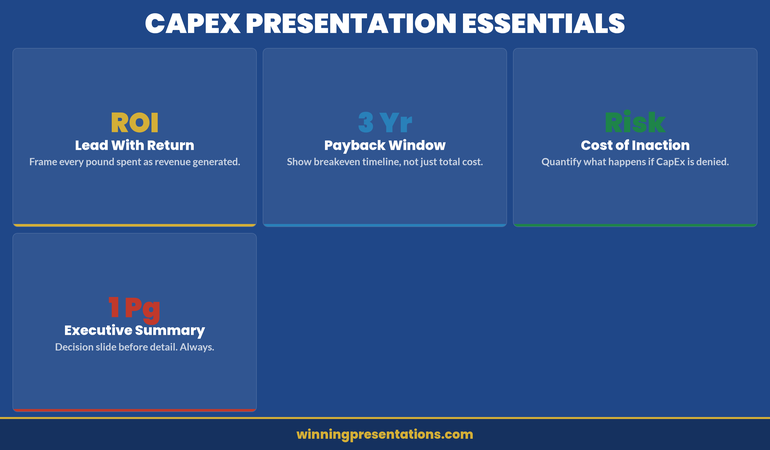
14 Jan 2026
presentation q&a techniques - how to handle questions with confidence after your presentation

Presentation Q&A: Why the Questions Terrify You More Than the Presentation


Quick Answer: The Q&A triggers more fear than the presentation because you lose control. You’ve rehearsed your slides; you can’t rehearse unpredictable questions. The solution isn’t predicting every question—it’s building a framework for handling any question. Prepare by category (challenges, gaps, critics), master bridging techniques, and remember: the audience wants you to succeed.

Still Panicking About Q&A?

You’re not alone. Most executives rank Q&A as their biggest presentation fear. The difference between panicked executives and calm ones? A structured system for handling any question. The Executive Q&A Handling System gives you exactly that: a question prediction framework, real-time response techniques, and 51 AI prompts to practise difficult scenarios.

Explore the System →

The Presentation That Nearly Ruined My Career

I delivered the best presentation of my career at Commerzbank in 2008. Twenty-two minutes of polished content, clear data, compelling recommendations. The CFO was nodding. My boss looked pleased.

Then came the Q&A. The first question was fine. The second was manageable. The third came from a director I’d never met: “Your projections assume a 12% market growth rate. What’s your evidence for that, given the current regulatory environment?”

I had evidence. Somewhere. In my backup slides. Which I couldn’t find. While twelve executives watched me fumble through my deck, my credibility evaporating with each passing second.

I eventually found the data. But by then, the damage was done. My carefully constructed presentation had been overshadowed by ninety seconds of visible panic.

That evening, I realised something that changed how I approach every presentation: the Q&A isn’t an afterthought. It’s where credibility is won or lost.

Over the following decade, I became obsessed with Q&A preparation. I interviewed executives who seemed effortlessly confident under questioning. I studied hostage negotiators and crisis communicators. I tested techniques with clients across industries.

What I discovered is that Q&A confidence has almost nothing to do with knowing all the answers. It comes from having a system for handling any question—including the ones you can’t predict.

Stop Rehearsing Every Possible Question

You can’t predict every question. But 95% of difficult questions fall into just 5 categories. Learn which ones matter for your presentation, and you’ll handle any curveball with calm certainty.

The Executive Q&A Handling System (£39) teaches you:

  • The 5-category preparation framework (done in under 30 minutes)
  • Bridging techniques that buy thinking time and signal confidence
  • Hostile question responses that reframe attacks into opportunities
  • 51 AI prompts to stress-test your answers before the room does

Master Your Q&A →

Designed for executives across banking, consulting, and technology. Master your Q&A in one afternoon.

The Psychology of Unpredictability

Why does Q&A trigger more anxiety than the presentation itself? The answer lies in control. During your presentation, you control what information you share, the order, pace, timing, which points to emphasise, when to pause. During Q&A, you control almost nothing. Questions come from anywhere. You’re reacting, not leading. Your carefully rehearsed structure is gone.

This loss of control activates your brain’s threat response. Suddenly you’re not presenting—you’re defending. Your body shifts into fight-or-flight mode, which is exactly the wrong state for clear, confident communication.

The physical symptoms follow: racing heart, shallow breathing, mind going blank. These aren’t signs of incompetence. They’re signs that your nervous system has misidentified a question as a threat.

Understanding this is the first step to managing it. Q&A anxiety isn’t about your knowledge or preparation. It’s about your brain’s response to unpredictability. And that response can be retrained.

How to Prepare When You Can’t Predict

You can’t anticipate every question. But you can prepare for every category of question. Before any presentation, work through five preparation categories:

  1. The Challenges – What are the five most likely challenges to your recommendation?
  2. The Gaps – Where is your data weakest? Identify yours before someone else does.
  3. The Critics – Who in the room is most likely to push back? What do they care about?
  4. The Clarifications – Which parts might be confusing? Prepare simpler explanations.
  5. The “What Ifs” – What scenarios might the audience raise that you haven’t addressed?

This category-based preparation is more valuable than trying to predict specific questions. For more on anticipating objections, see our guide on how to handle difficult questions in a presentation.

Want a structured framework that handles 95% of difficult questions? The Executive Q&A Handling System teaches you category-based preparation, real-time bridging techniques, and hostile question responses—all in one afternoon.

What to Say When You Don’t Know

Here’s a liberating truth: you don’t need to know everything. The most confident executives all share one trait: they’re comfortable saying “I don’t know.” But they say it strategically:

  • The Honest Admission: “I don’t have that specific data with me, but I can get it to you by end of day tomorrow.”
  • The Bridge: “That’s outside my direct area, but what I can tell you is…”
  • The Redirect: “Sarah has been leading that workstream—Sarah, can you speak to that?”
  • The Scope Clarification: “That’s a great question, but it’s probably outside the scope of today’s discussion.”

What you should never do: guess, bluff, or provide data you’re not certain about.

Handling Hostile and Loaded Questions

Not all questions are neutral. Some come with a hidden agenda. Some carry hostility. Difficult question types include:

  • The Loaded Question – reframe the premise before answering
  • The Hostile Question – stay curious, not defensive; treat it as information-seeking
  • The Agenda Question – acknowledge the alternative viewpoint without abandoning your position
  • The Ambush Question – ask for context if unfamiliar; take your time before responding

Key principle: hostile questions are often about emotion, not information. Your job is to address the underlying concern, not just the surface question.

The Difference Between Flustered and Composed

The executives who stay calm under hostile questioning share one thing: they’ve practised specific response techniques until they become automatic. They don’t think—they respond with precision.

Inside the Executive Q&A Handling System (£39, instant access):

  • 7 structured Q&A techniques that signal leadership under pressure
  • Scripts for hostile, loaded, and ambush questions
  • The Parking Lot technique and 4 other methods for handling questions that would derail the discussion
  • 51 AI-powered question prompts for personalised practice

Handle Any Question →

Immediate digital download, ready to use before your next presentation.

7 Techniques That Transform Q&A

These seven techniques have been tested with executives. Each one addresses a specific challenge in Q&A delivery:

  1. Repeat and Reframe – Echo the question back in your own words. This buys thinking time, demonstrates you understood, and shifts the framing to your advantage.
  2. The 30-Second Rule – Keep answers to 30 seconds maximum. Brevity signals confidence; rambling signals uncertainty.
  3. Bridge to Strength – Never leave an answer on a defensive note. Bridge to a point of strength or a supporting fact.
  4. The Parking Lot – For questions that derail the discussion, offer to discuss offline: “That’s important. Let’s park it and I’ll follow up with you.”
  5. Evidence Anchoring – When answering, point to a specific piece of data or research. Vagueness breeds doubt; specificity builds credibility.
  6. The Pause – Pause for 2-3 seconds before answering. It reads as thoughtful, not uncertain. Silence is underused power.
  7. End on Your Terms – Summarise your key point before moving to the next question. Don’t let the questioner have the last word on your topic.

For the specific anxiety that hits during Q&A rather than in planned content, the Q&A anxiety guide addresses the in-the-moment recovery techniques.

Case Study: From Q&A Terror to Q&A Confidence

Priya was a senior manager at a technology company. Brilliant during presentations—her slides were polished, her data was solid, her delivery was engaging. But the moment the first question came, she fell apart. Racing heart, defensive tone, rambling answers.

The problem wasn’t her knowledge. She over-prepared on content and under-prepared on Q&A. We restructured her preparation:

  • Week before: Work through the 5-category objection prep framework. Identify every possible challenge, gap, and critic.
  • Day before: Ask a colleague to challenge her with difficult questions. One hour of real dialogue beats days of solo preparation.
  • Morning of: 10 minutes practising “I don’t know” responses and pause techniques. Physical calibration, not content review.

We also addressed the physical response: before each practice question, she would pause for 2 seconds, take a full breath, then answer. By the time of her next board presentation, this was automatic.

The result: she handled an aggressive line of questioning from the toughest director in the room. No hesitation. No defensiveness. Clear, evidence-anchored answers with strategic pauses. When she finished, the CEO asked her to lead the follow-up strategic initiative.

Frequently Asked Questions

1. Why is the Q&A scarier than the presentation itself?

During a presentation, you control the content, pace, and flow. During Q&A, you lose control. Questions come from anywhere, and you’re reacting instead of leading. This perceived loss of control triggers your threat response—fight-or-flight—which is exactly the wrong neurological state for calm communication.

2. How do I prepare for questions I can’t predict?

You prepare by category instead of by specific question. Work through five categories: the challenges to your recommendation, the gaps in your data, the likely critics in the room, clarifications that might be needed, and “what if” scenarios. This framework captures 95% of difficult questions before they’re asked.

3. What do I do when I don’t know the answer?

You say so—strategically. Use one of four approaches: the honest admission (“I don’t have that data, but I’ll get it by tomorrow”), the bridge (“That’s outside my area, but here’s what I can tell you”), the redirect (“Sarah’s leading that—Sarah, you take this one”), or the scope clarification (“That’s outside today’s scope”). Never guess or bluff.

4. How do I handle hostile questions in a presentation?

Reframe the premise. If someone asks “Doesn’t your plan ignore the regulatory risk?” you might respond: “Actually, our plan was built around regulatory compliance. Here’s why…” Treat hostile questions as information-seeking, not attacks. Stay curious, not defensive.

5. Should I repeat the question before answering?

Yes—but reframe it. Echo the question back in your own words. This demonstrates understanding, buys you thinking time, and shifts the framing slightly in your favour. Example: “So you’re asking whether the timeline accounts for implementation lag—great question.”

6. How long should my Q&A answers be?

Aim for 30 seconds maximum. Longer than that, you’re rambling—which signals uncertainty. Keep it short, evidence-anchored, and end on a point of strength. If they want more detail, they’ll ask.

Get Weekly Insights on Presentation Mastery

Join executives who receive The Winning Edge—weekly strategies for presenting with confidence, handling difficult stakeholders, and leading through communication.

Subscribe to The Winning Edge

Free Resource: CFO Questions Cheatsheet

If you’re presenting to finance leadership, you need this. The CFO Questions Cheatsheet covers the 20 questions CFOs ask most frequently, with research-backed answers and talking points for each. Download free.

Download the Cheatsheet

Q&A Is Where Leaders Are Made

The presentation shows you can prepare. The Q&A shows you can think. It’s the moment where audiences decide whether you’re a functional expert or a leader worth following.

The executives who master Q&A aren’t smarter. They’re not better informed. They’ve simply applied a system—a framework for handling unpredictable questions with calm certainty. They prepare by category, they bridge to strength, they’re comfortable saying “I don’t know,” and they pause before speaking.

That system is learnable. In a few hours of focused preparation, you can transform Q&A from your biggest fear into your greatest strength. You can be the executive in the room who stays composed when others panic. Who clarifies when others fumble. Who builds credibility during questioning instead of just defending.

If Commerzbank taught me anything, it’s this: your presentation is the opening act. Your Q&A is where the audience decides whether you’re worth believing.

Related Resources


About the Author

Mary Beth Hazeldine is the Owner & Managing Director of Winning Presentations. She spent 25 years in banking, including roles at JPMorgan Chase, PwC, RBS, and Commerzbank. A qualified clinical hypnotherapist and NLP practitioner, she advises executives across financial services, healthcare, technology, and government on presenting with confidence and credibility. She specialises in Q&A preparation, stakeholder management, and high-stakes presentation confidence.

13 Jan 2026
Presentation gestures guide - confident hand movements and body language techniques for effective presenting

Presentation Gestures: Why Your Hands Reveal Your Confidence

Quick Answer: Your hands broadcast your confidence level before you speak a word. Purposeful gestures—open palms, numbered fingers, size indicators—project authority. Nervous habits—fidgeting, pocket-diving, fig-leaf position—undermine everything you say. The goal isn’t eliminating movement but channelling energy into gestures that reinforce your message.

I once watched a CFO destroy a £3 million budget proposal without saying anything wrong.

His content was solid. His slides were clear. His recommendations were sound. But his hands told a different story.

Throughout the presentation, he gripped the sides of the lectern like it might fly away. When he stepped out to make a point, his hands immediately dove into his pockets. During questions, he crossed his arms tightly across his chest.

The board saw a nervous executive who didn’t believe in his own proposal. They rejected it.

Afterward, he asked me what went wrong. “Your hands,” I told him. “They were screaming that you weren’t confident. And the board listened to your hands, not your words.”

He was genuinely shocked. He had no idea his gestures were undermining him.

⭐ Slides That Free Your Hands

The Executive Slide System creates presentations you can deliver without clutching notes or reading from screens. When your slides guide you naturally, your hands are free to gesture with purpose instead of grasping for security.

Get the Executive Slide System → £39

The Gestures That Command Authority

Confident presenters use their hands with intention. Here are the gestures that project authority:

Open Palms

Palms facing slightly upward signal honesty and openness. Politicians and executives use this instinctively when making important points. It says “I have nothing to hide.” This is foundational to effective presentation body language.

Numbered Fingers

“There are three things to consider…” accompanied by three raised fingers creates structure and memorability. It signals organisation and helps audiences track your points.

Size and Scale Indicators

Showing “this big” or “that small” with your hands makes abstract concepts concrete. When discussing growth, expansion, or comparison, let your hands illustrate the scale.

Steepling

Fingertips touching in front of your chest projects confidence and thoughtfulness. Use it during pauses or when listening to questions. It reads as authoritative without being aggressive.

Purposeful Pointing

Pointing at slides, referencing audience members (carefully), or emphasising key moments creates direction and energy. The key word is purposeful—random pointing looks erratic.

For more on how your physical presence affects your message, see our complete guide to presentation body language.

Confident presentation gestures versus nervous hand habits - open palms, steepling, and numbered fingers versus fidgeting, pockets, and crossed arms

The Nervous Habits That Undermine You

These gestures signal anxiety—even when you’re not feeling it:

The Pocket Dive

Hands in pockets reads as disengaged or hiding something. One hand occasionally is acceptable; both hands continuously is a credibility killer.

The Fig Leaf

Hands clasped in front of your groin is a classic defensive posture. It screams discomfort and makes you look smaller.

The Lectern Death Grip

White-knuckling the podium broadcasts fear. It also locks you in place, preventing natural movement that creates engagement.

Self-Touching

Playing with hair, touching your face, adjusting clothing—all self-soothing behaviours that signal nervousness. Your audience notices even when you don’t.

The Fidget

Clicking pens, jingling coins, rubbing hands together. Nervous energy has to go somewhere—but these outlets distract your audience and undermine your message.

The challenge is that most people don’t know they’re doing these things. That’s why awareness of your body language is the first step to fixing it.

Your “Home Base” Position

Between gestures, you need somewhere for your hands to go. This is your home base—a neutral position that looks natural and confident.

Best options:

  • Arms relaxed at your sides (harder than it sounds, but projects most confidence)
  • Hands lightly clasped at waist level (comfortable and neutral)
  • One hand holding notes, other at side (practical for longer presentations)

Avoid:

  • Hands behind back (looks like you’re hiding something or being interrogated)
  • Arms crossed (defensive, closed off)
  • Hands on hips (can read as aggressive or impatient)

Practice your home base until it feels natural. Then gestures become departures and returns—purposeful movements rather than constant fidgeting.

This is part of the broader body language framework that transforms how audiences perceive you.

🏆 Master Your Complete Physical Presence

The Executive Buy-In Presentation System covers gestures, posture, movement, eye contact, and voice—the complete physical toolkit that separates good presenters from commanding ones.

Learn More → £199

📧 Join 2,000+ professionals getting weekly presentation insights. Subscribe to The Winning Edge →

Frequently Asked Questions

What should I do with my hands during a presentation?

Use purposeful gestures that match your words—open palms for honesty, numbered fingers for lists, size indicators for scale. Between gestures, rest hands at your sides or lightly clasped at waist level. Avoid pockets, crossed arms, or fig-leaf position. More techniques in our body language guide.

What hand gestures show confidence when presenting?

Open palms facing slightly upward signal honesty and openness. Steepling (fingertips touching) projects authority. Purposeful pointing emphasises key points. The key is intentional movement that matches your message, not constant motion.

How do I stop nervous hand gestures when presenting?

First, identify your specific habit (fidgeting, touching face, gripping lectern). Then practice with hands at sides as your ‘home base.’ Nervous energy needs somewhere to go—channel it into purposeful gestures rather than trying to eliminate movement entirely. This connects to broader presentation body language principles.

📥 Free Download: 7 Presentation Frameworks

Get the structural frameworks that let you present confidently—so your gestures can be purposeful rather than anxious.

Download Free →

Related: Presentation Body Language: The Complete Guide to Physical Presence


Mary Beth Hazeldine spent 24 years at JPMorgan, PwC, RBS, and Commerzbank. She’s a clinical hypnotherapist and MD of Winning Presentations.