I was more terrified presenting at 45 than I was at 25.
That sounds backwards. Twenty years of experience. Hundreds of presentations. A track record of success. By every logical measure, I should have been more confident, not less.
But there I was — senior enough to present to the executive committee at Commerzbank, experienced enough to know exactly what I was doing, and so anxious before every high-stakes presentation that I sometimes couldn’t eat for 24 hours beforehand.
When I finally trained as a clinical hypnotherapist and started working with executives on presentation anxiety, I discovered something that changed everything: I wasn’t unusual. The pattern I experienced — anxiety that increases with seniority rather than decreasing — is remarkably common among high-performing professionals.
And there’s solid neuroscience behind why it happens.
In this article:
Quick answer: Performance anxiety often intensifies with seniority because of three factors: accumulated negative experiences that compound over time, genuinely higher stakes as you advance, and identity threat — the fear that a poor presentation will reveal you as less competent than your position suggests. The good news: these specific causes respond well to targeted interventions that work differently from generic “confidence building” advice.
⚡ Presenting in the next 24 hours?
Do this now:
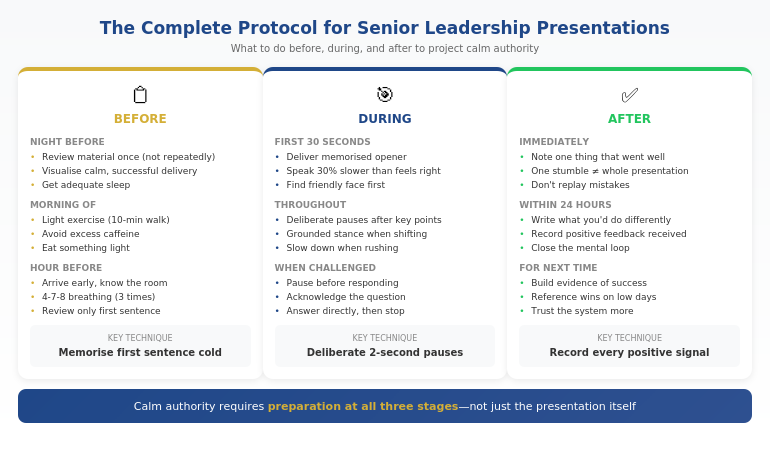
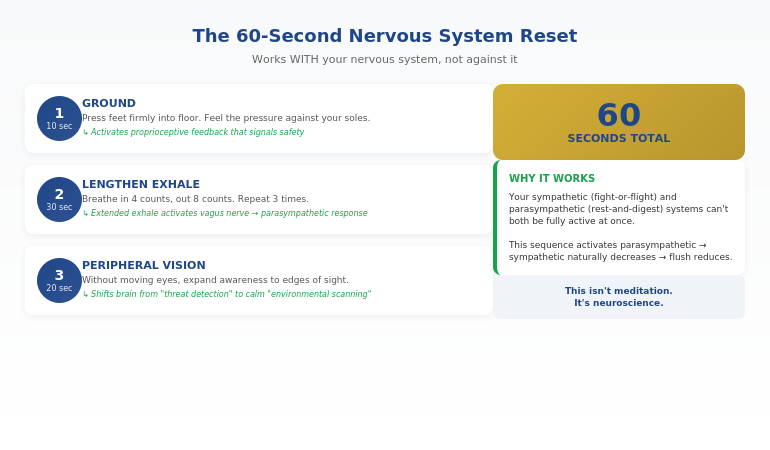
- 4-7-8 breathing × 2: Inhale 4 seconds, hold 7, exhale 8. Repeat twice.
- 10-second “eyes soft” reset: Soften your gaze, drop your shoulders, unclench your jaw.
- First sentence memorised: Know your opening cold. Everything else can flex.
- One “re-entry line” ready: If you lose your place: “Let me come back to the key point here…”
This 60-second protocol interrupts the anxiety spiral. For the deeper work of rewiring the pattern permanently, that’s what Conquer Speaking Fear is designed to do.
Why Performance Anxiety Gets Worse With Experience
The assumption that experience reduces anxiety is intuitive but wrong. Here’s why:
Your brain doesn’t average experiences — it accumulates them.
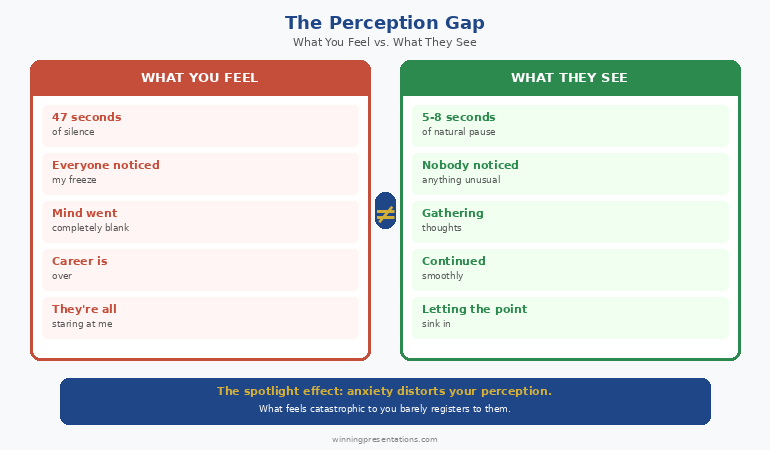
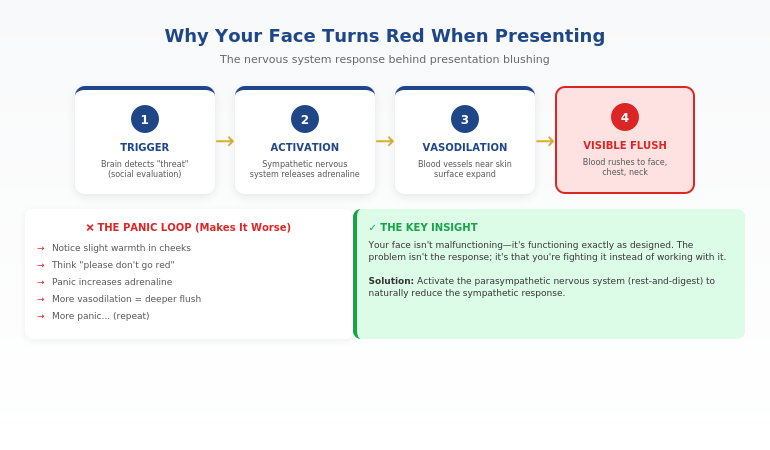
Every presentation that went badly, every moment you stumbled over words, every time you saw someone check their phone while you were speaking — your amygdala filed all of it. Not as “learning experiences.” As threats.
At 25, you might have had one or two awkward presentations stored in your threat database. At 45, you might have dozens. Your conscious mind remembers the successes. Your nervous system remembers every moment of perceived danger.
This is why a senior executive with a stellar track record can feel more anxious than a graduate giving their first presentation. The graduate has no threat history. The executive has twenty years of accumulated micro-traumas, most of which they’ve consciously forgotten but their body hasn’t.
The Anxiety Accumulation Effect
I call this phenomenon the Anxiety Accumulation Effect. It works like this:

Early career: You’re nervous but resilient. Bad presentations sting, but you bounce back quickly. You have less to lose and more time to recover.
Mid-career: Stakes rise. Bad presentations now have real consequences — missed promotions, lost clients, damaged reputation. Each negative experience leaves a slightly deeper mark. Your nervous system starts anticipating threat more quickly.
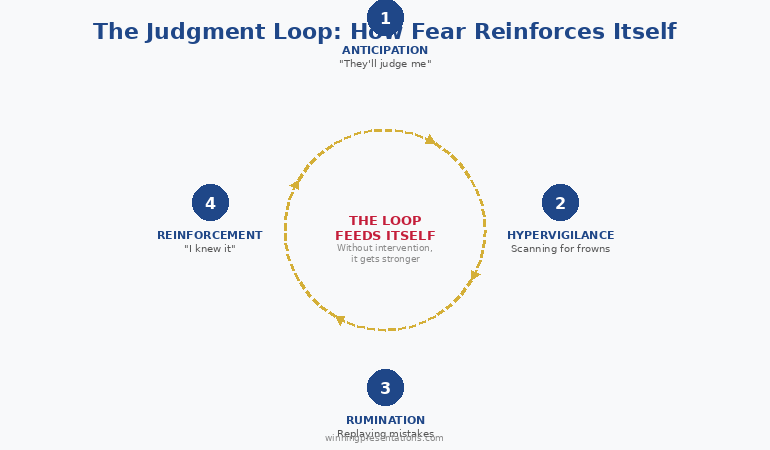
Senior level: You’ve accumulated years of high-stakes experiences. Your threat detection system is finely tuned — perhaps too finely tuned. You notice micro-signals in the audience that junior presenters miss entirely. Your body responds to a board member shifting in their seat the same way it would respond to a genuine threat.
The cruel irony: the skills that made you successful — attention to detail, reading the room, high standards — become the very mechanisms that amplify your anxiety.
Higher Stakes, Higher Fear
Let’s be honest about something: the stakes are higher when you’re senior.
At 25, a bad presentation might mean an uncomfortable conversation with your manager. At 45, it might mean:
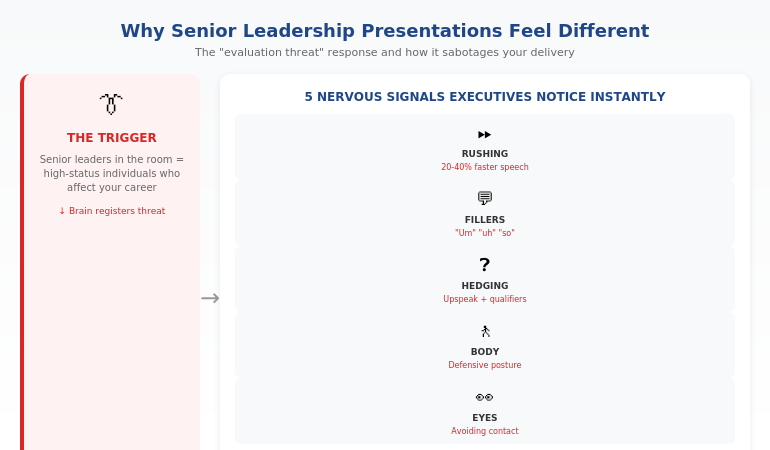
Career consequences: You’re presenting to people who decide your bonus, your promotion, your future at the company. The evaluation is real, not imagined.
Financial exposure: You might be presenting a proposal worth millions. Your mortgage, your children’s education, your retirement — they’re all connected to your professional performance in ways they weren’t at 25.
Reputation risk: You’ve spent two decades building credibility. One truly disastrous presentation in front of the wrong people can undo years of careful positioning.
Leadership expectations: People expect you to be polished. The tolerance for nervousness that exists for junior staff evaporates at senior levels. Visible anxiety can be interpreted as lack of confidence in your own recommendations.
Your anxiety isn’t irrational. It’s your brain accurately perceiving that the consequences of failure have genuinely increased.
The problem isn’t that you’re afraid. The problem is that fear has become disproportionate to the actual probability of those consequences occurring.
Break the Accumulation Pattern
Conquer Speaking Fear (£39, instant download) uses clinical hypnotherapy and NLP techniques specifically designed to interrupt the anxiety accumulation that builds over a career. Not positive thinking. Not “just practice more.” Actual neurological intervention that changes how your brain responds to presentation situations.
Created by a clinical hypnotherapist who experienced this pattern firsthand.
When Your Identity Is on the Line
This is the factor nobody talks about, and it might be the most important one.
At 25, your identity is still forming. A bad presentation doesn’t threaten who you are — it’s just something that happened while you were learning.
At 45, you’ve built an identity around being competent, experienced, capable. You’re the person others come to for advice. You’re the senior voice in the room. You’ve earned your position through demonstrated ability.
And every high-stakes presentation becomes a test of that identity.
The fear isn’t just “what if I stumble over my words?” It’s “what if they discover I’m not as competent as they think I am?” What if this presentation reveals that my success was luck, not skill? What if I’ve been fooling everyone, including myself?
Psychologists call this identity threat. It’s closely related to imposter syndrome, but it’s slightly different. Imposter syndrome is the chronic feeling that you don’t deserve your success. Identity threat is the acute fear that a specific performance will expose you.
Senior professionals are particularly vulnerable to identity threat because they have more identity invested in their professional competence. The more you’ve built your self-concept around being good at your job, the more terrifying it is to risk that self-concept in public.
For more on the psychology of presentation confidence, see my guide on building presentation confidence that actually lasts.
Ready to address identity threat at its root? The Conquer Speaking Fear programme includes specific techniques for separating your self-worth from any single presentation.
What Actually Helps (And What Doesn’t)
If you’re experiencing worsening presentation anxiety as you advance in your career, generic advice won’t help. You’ve probably already tried it.
What doesn’t work:
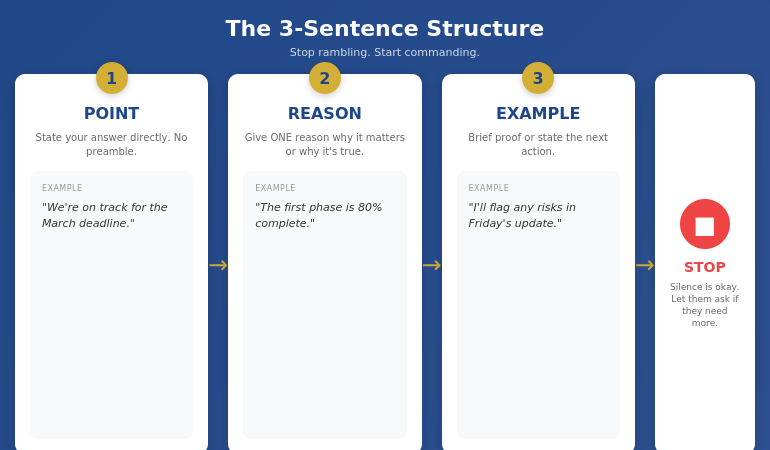
“Just practice more.” You’ve been practicing for 20 years. If practice alone solved this, you’d be cured by now. Practice without addressing the underlying threat response just gives you more opportunities to reinforce the anxiety pattern.
“Imagine the audience in their underwear.” This advice was always absurd, but it’s particularly useless for senior professionals presenting to boards and executive committees. You can’t trick your brain into thinking high-stakes situations aren’t high-stakes.
“Fake it till you make it.” You’ve been “making it” for two decades. The problem isn’t lack of success — it’s that success hasn’t translated into reduced anxiety. Faking confidence while feeling terrified is exhausting, and your body knows the difference.
“Remember, the audience wants you to succeed.” Maybe. But your nervous system doesn’t care about the audience’s intentions. It cares about the perceived threat of evaluation. Rational reframes rarely override limbic system responses.
What actually works:
Nervous system regulation. Before you can think differently, you need to feel differently. Techniques that directly calm the physiological stress response — specific breathing patterns, vagal toning, somatic interventions — create a foundation for everything else.
Pattern interruption. The anxiety response is a learned pattern. Your brain learned to associate presentations with threat. Clinical techniques like hypnotherapy and NLP can interrupt and rewrite these patterns at a level that conscious effort can’t reach.
Identity work. If your anxiety is rooted in identity threat, you need to do the deeper work of separating your self-worth from any single performance. This isn’t about lowering your standards — it’s about recognising that you remain competent even when a specific presentation doesn’t go perfectly.
Graduated exposure with support. Not just “do more presentations” — but structured exposure with proper nervous system support, so each presentation becomes evidence of safety rather than another threat to accumulate.
For immediate physiological techniques, see my guide on calming nerves before a presentation.
These approaches fail because they target the wrong system. Presentation anxiety in experienced professionals is a nervous system pattern, not a knowledge gap — and that is what Conquer Speaking Fear (£39) is designed to address.
The Permission You Might Need
If you’re a senior professional struggling with presentation anxiety that seems to be getting worse, I want to tell you something important:
This doesn’t mean you’re weak. It doesn’t mean you’re a fraud. It doesn’t mean you don’t deserve your success.
It means your nervous system has been doing its job — protecting you from perceived threats — and it’s gotten a bit too good at it. The very vigilance that helped you succeed is now working against you.
You’re not broken. You’re not unusual. And you’re not stuck with this forever.
The anxiety accumulation that happens over a career can be addressed. The patterns can be interrupted. The nervous system can be retrained. I know because I’ve done it myself, and I’ve helped hundreds of other senior professionals do the same.
For a deeper understanding of how to overcome speaking fear at its root, see my comprehensive guide on overcoming the fear of public speaking.
It’s Time to Break the Pattern
Conquer Speaking Fear (£39, instant download) gives you the clinical tools to interrupt the anxiety accumulation that builds over a career. Hypnotherapy recordings, NLP techniques, nervous system regulation protocols, and the identity work that separates your self-worth from any single presentation.
Instant download. Start interrupting the pattern today.
Frequently Asked Questions
Is it normal for presentation anxiety to get worse as I get more senior?
Yes, and it’s more common than you think. The combination of accumulated negative experiences, genuinely higher stakes, and increased identity investment creates conditions for anxiety to intensify rather than fade. Many senior executives experience this but don’t discuss it because they assume it reflects poorly on them. It doesn’t — it reflects the normal functioning of a nervous system that’s become overly protective.
I’ve been successful for 20 years. Why do I still feel like a fraud before presentations?
This is identity threat at work. The more you’ve built your professional identity around competence, the more any single presentation feels like a test of that identity. Your brain isn’t questioning your track record — it’s worried that this specific presentation might be the one that “exposes” you. This fear is almost always disproportionate to reality, but knowing that doesn’t make it go away. It requires intervention at the nervous system level.
Will medication help with presentation anxiety?
Beta blockers can reduce physical symptoms like racing heart and shaking hands, and some executives use them for high-stakes presentations. However, medication addresses symptoms without changing the underlying pattern. It can be useful as a short-term support while you do deeper work, but most people find they want to eventually present without chemical assistance. The goal should be rewiring the anxiety response, not permanently managing it.
How is this different from the anxiety I felt early in my career?
Early-career anxiety is typically about competence uncertainty — “Can I do this?” Senior-level anxiety is typically about identity threat — “What if this reveals I’m not who I appear to be?” The underlying fear has shifted from capability to exposure. This requires different interventions. Early-career anxiety often responds to skill-building and practice. Senior-level anxiety requires nervous system work and identity separation.
Your Next Step
If presentation anxiety has been getting worse as you’ve advanced in your career, you’re not alone — and you’re not stuck with it.
The anxiety accumulation pattern can be interrupted. The nervous system can be retrained. The identity threat can be addressed.
You’ve earned your position through decades of hard work. You deserve to present without the anxiety that’s been accumulating along the way.
📧 Get the Winning Edge Newsletter
Weekly insights on presentation confidence, nervous system regulation, and the psychology of high-stakes communication — from a clinical hypnotherapist with 25 years in banking.
Related reading: If your anxiety spikes specifically around monthly or quarterly business reviews, the problem might be structural as much as psychological. Read Monthly Business Reviews That Don’t Bore Everyone to Death for the 20-minute format that reduces both preparation stress and presentation pressure.
About the Author
Mary Beth Hazeldine is the Owner & Managing Director of Winning Presentations. With 25 years of corporate banking experience at JPMorgan Chase, PwC, Royal Bank of Scotland, and Commerzbank, she experienced firsthand the anxiety accumulation pattern described in this article.
Now a qualified clinical hypnotherapist and NLP practitioner, Mary Beth specialises in helping senior professionals break the presentation anxiety patterns that build over a career. She combines executive communication expertise with evidence-based clinical techniques.