Most executives don’t fear the presentation itself. They fear the days leading up to it. The dread starts on Monday when the presentation is Friday. It builds through the week—rehearsal feedback loops in your mind, worst-case scenarios feel plausible, sleep becomes difficult. Then Thursday night arrives and you’re exhausted before you’ve even stepped in front of the room. The paradox is that the actual presentation, once it starts, rarely feels as bad as the week of anticipating it.
In this article:
Amara had scheduled a board presentation for March 15th. It was important—a funding case for a new product line, the kind of thing that could accelerate her career if she landed it. When she put it on her calendar on February 28th, it felt manageable.
By March 10th, five days before, her stomach started tightening every morning. She rehearsed in her head while commuting. She woke at 3 a.m. replaying questions she imagined the board might ask. She changed slides twice—not because they were broken, but because she was searching for safety that no slide could provide.
On March 14th, exhausted, she called a colleague. “I’m not sleeping. I’m stressed about this. I don’t know if I’m ready.” The colleague asked: “Do you know your material?” “Yes,” she said. “Could you explain the investment case to me right now?” “Yes, easily.” “Then the presentation will be fine. The dread you’re feeling isn’t about readiness—it’s just dread.”
It was the most useful thing anyone said to her that week. Not “You’ll be great,” which felt hollow. Not “Don’t be nervous,” which is impossible. Just: “That feeling isn’t information. It’s just the anticipatory loop running.”
If presentation anxiety is making the week before your big talk harder than the talk itself, you might explore Conquer Speaking Fear. It’s structured specifically for acute presentation anxiety—with nervous system techniques, reframing exercises, and practical tools designed for the hours leading up to high-stakes presentations.
What is anticipatory anxiety?
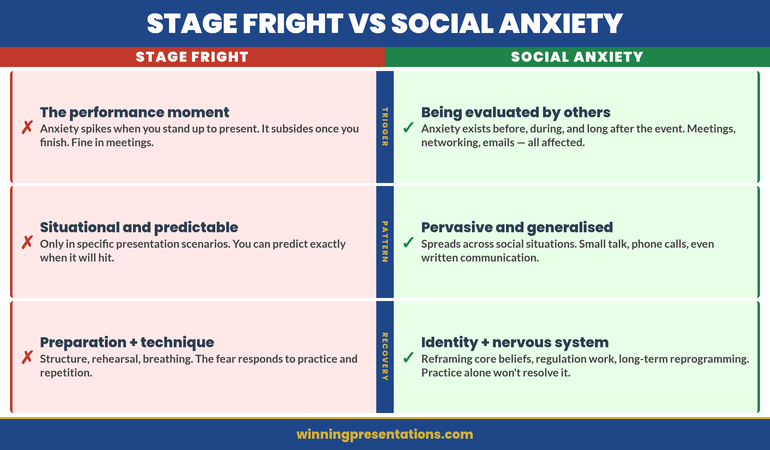
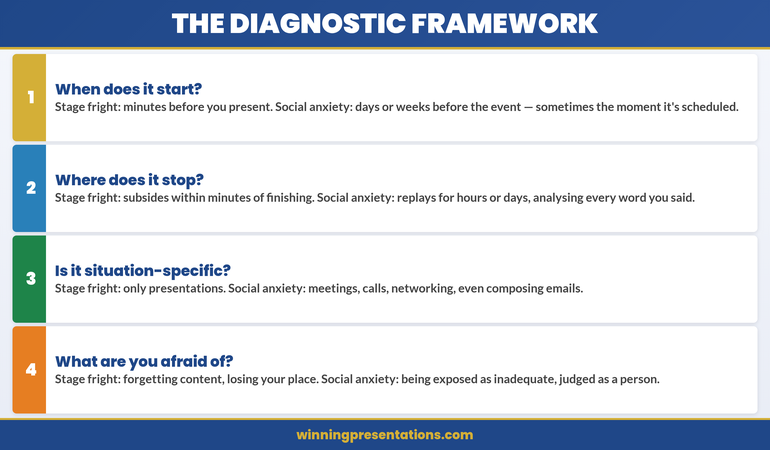
Anticipatory anxiety is the worry you experience before an event—in this case, a presentation. It’s not the nervousness you feel when the presentation actually starts. It’s the dread that builds in the days (or hours) leading up to it.
The distinction matters because the two anxieties serve different purposes. Nervousness during the event is your nervous system preparing you to perform. Adrenaline, focus, heightened awareness—these are useful. Your mind narrows, your perception sharpens, you adapt to the room’s energy.
Anticipatory anxiety is different. It’s abstract worry about something that hasn’t happened yet. Your mind runs through scenarios. You imagine questions you can’t answer. You rehearse failed moments. You lose sleep. You check the slides one more time looking for problems. You might feel physically unwell—nausea, chest tightness, difficulty concentrating.
And here’s the cruel part: anticipatory anxiety doesn’t improve your performance. It just makes the waiting harder. By the time the presentation arrives, you’re already depleted.
Why it intensifies the longer you wait
Anticipatory anxiety follows a predictable pattern. The further away the presentation, the more abstract your fear. “I have a board presentation in six weeks.” Manageable. “I have a board presentation next Friday.” Now it’s concrete. “I have a board presentation tomorrow.” Now your nervous system is engaged.
Each day that passes without the event happening allows your mind to generate new “what if” scenarios. What if the projector fails? What if I forget my key points? What if they ask me something I can’t answer? What if I panic?
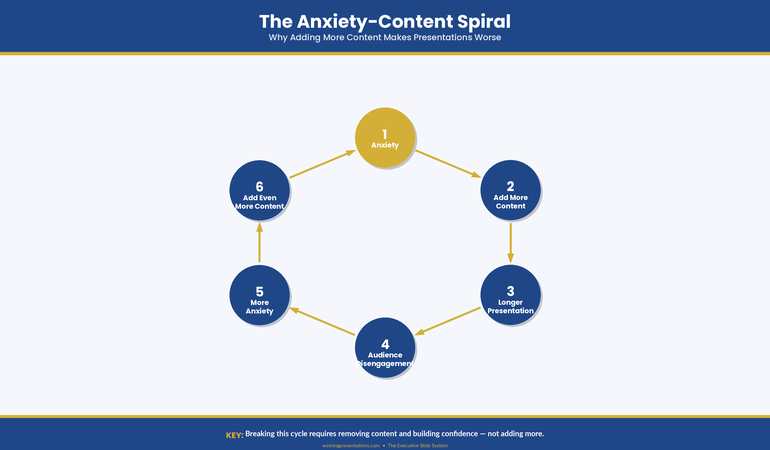
Most executives, particularly those who care about performance, respond to anticipatory anxiety by preparing harder. You run the presentation again. You revise the slides. You rehearse answers to tougher questions. This is rational—if I’m more prepared, I’ll be less anxious.
But the research is clear: beyond a certain point, additional preparation doesn’t reduce anticipatory anxiety. It reinforces it. Each rehearsal is another opportunity to find something “wrong” or to imagine the audience’s judgment. You’re feeding the anxiety loop, not breaking it.

Techniques Designed for Presentation Anxiety
Conquer Speaking Fear gives you nervous system techniques, reframing exercises, and decision-making frameworks designed for acute presentation anxiety—the kind that starts days before and peaks the morning of.
- Nervous system reset techniques for anxiety spirals
- Reframing exercises that separate dread from actual risk
- Pre-presentation routines that build confidence
- Tools to manage the anxious mind without ignoring it
Explore Conquer Speaking Fear — £39
Designed for executives managing acute presentation anxiety
The neuroscience of dread
Your brain doesn’t distinguish between anticipating something bad and experiencing it. When you imagine the board asking a question you can’t answer, your amygdala (your brain’s threat detector) activates as if it’s happening right now. Your nervous system releases cortisol and adrenaline. Your heart rate rises. You feel the physical symptoms of anxiety even though the threat is imagined.
This is useful when you’re genuinely in danger. Your body prepares you to fight or flee. But when the threat is abstract—”What if I mess this up?”—the physical response becomes a problem. You can’t fight or flee from a presentation. You can only sit with the activation.
The longer the time between now and the presentation, the more time your mind has to rehearse worst-case scenarios. Each rehearsal deepens the neural pathway, making the anxiety feel more real, more inevitable. By Thursday night, your brain has convinced you that failure is probable, even though nothing has actually happened.
Add sleep disruption to this equation, and your emotional regulation gets worse. You’re more irritable, more prone to catastrophic thinking, less able to distinguish between real risk and imagined risk. The presentation itself hasn’t changed. Your mental state has deteriorated.
How to break the loop
The first step is recognising that anticipatory anxiety is not information about your readiness. It’s a feeling that your nervous system is generating based on threat-perception, not on actual risk assessment.
This seems obvious when you read it. But in practice, when you’re exhausted and anxious, your mind treats dread as evidence. “I’m this anxious, so something must be genuinely wrong.” In fact, you can be completely prepared and still experience intense anticipatory anxiety. The two are independent.
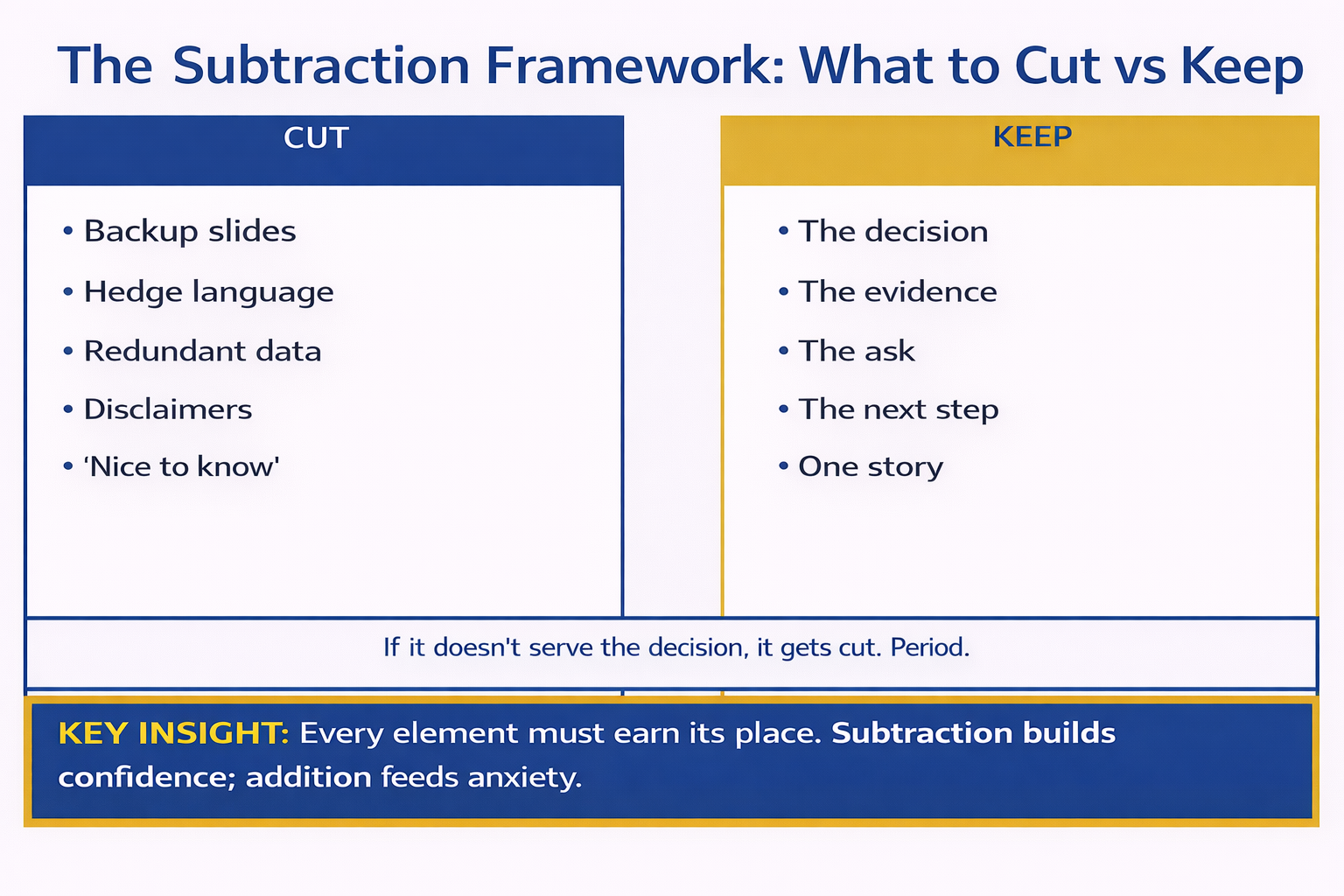
The second step is stopping the preparation loop. Once you reach a threshold of readiness—you know your material, you’ve done one solid rehearsal, you have answers to likely questions—additional rehearsal is counterproductive. It gives your anxious mind more material to worry about.
Instead of rehearsing more, you need to:
- Name the loop: “This is anticipatory anxiety, not actual danger. It will pass.”
- Interrupt the rehearsal: When you notice yourself running through scenarios, consciously stop. Physical activity (a walk, a gym session) interrupts the mental loop more effectively than trying to think your way out of it.
- Reset your nervous system: Breathing techniques, cold water, grounding exercises—these activate your parasympathetic nervous system and counteract the threat activation.
- Establish a boundary: “I will prepare until Wednesday. After that, no more slides, no more rehearsal.” This protects you from the preparation loop extending into the presentation day.
- Redirect attention: The night before, shift focus away from the presentation. Read something unrelated. Spend time with people you care about. Let your mind rest from the threat narrative.
If your anticipatory anxiety is severe enough to disrupt your sleep or work in the days before a presentation, Conquer Speaking Fear includes specific nervous system techniques designed for those hours when the dread feels most intense.

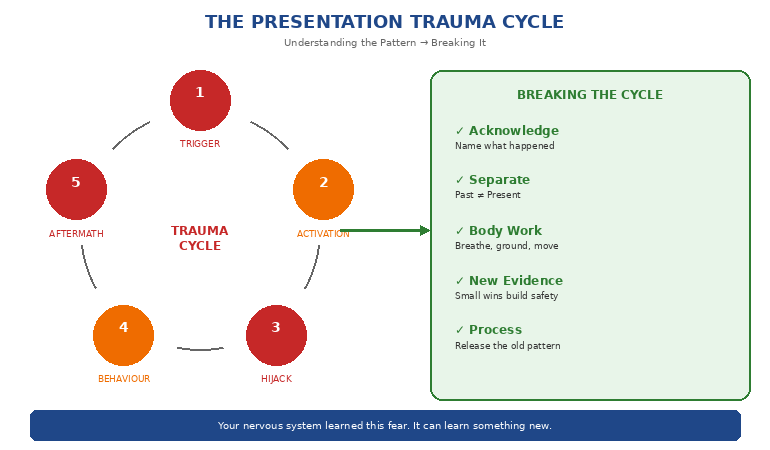
In practice, breaking the anticipatory anxiety loop follows four moves. The first is to acknowledge — name the dread without judging yourself for feeling it. “I’m anxious about Thursday’s presentation” is a statement of fact, not a confession of weakness. The moment you name it, you create distance between yourself and the feeling. You’re observing the anxiety rather than being consumed by it.
The second move is to prepare early — start with one slide to break the avoidance pattern. Anticipatory anxiety often creates a paradox: the dread makes you avoid the very preparation that would reduce it. Opening the presentation file and writing a single slide title — even a bad one — interrupts avoidance. Action, however small, breaks the freeze.
The third is to rehearse aloud — speak the opening three times to build familiarity. Not a full run-through. Just the first sixty seconds. Your voice forming the words builds a physical memory that your body can fall back on when anxiety spikes. The opening is where panic is strongest. If your mouth already knows the first two sentences, your nervous system calms faster.
The fourth move is to reframe — shift your focus from performance to contribution. Instead of “Will I do well?”, ask “What does the room need from me?” When you reframe the presentation as a contribution rather than a test, the threat perception drops. You’re not being judged; you’re providing something valuable. That distinction changes how your nervous system responds to the approaching event.
Practical strategies that shift anxiety to readiness
Beyond interrupting the anxiety loop, there are specific practices that help executives convert anticipatory dread into something more useful: focused readiness.
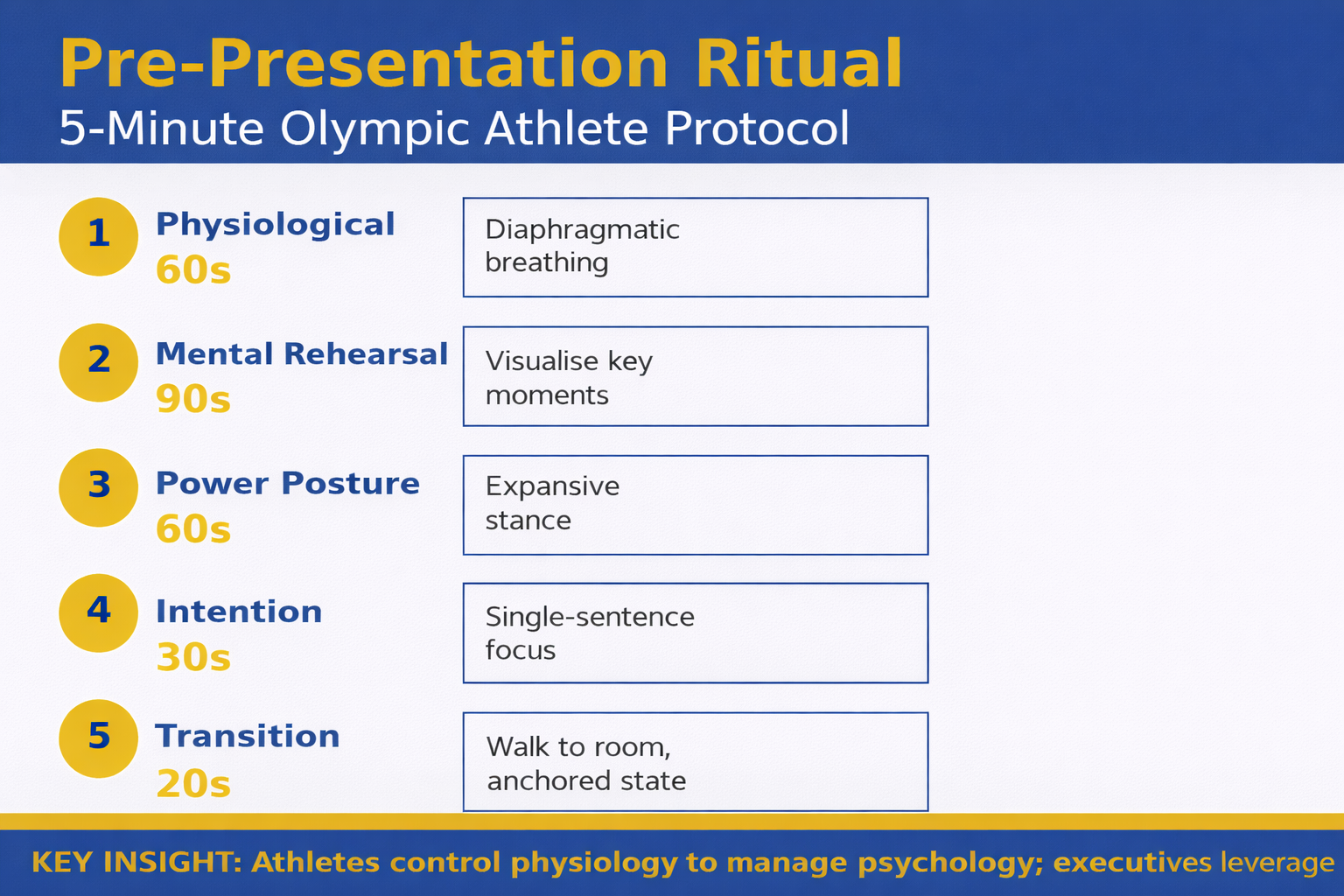
Compartmentalise the presentation time. Instead of thinking about “the presentation” as this amorphous future threat, break it into concrete actions: What do you do 10 minutes before you start? What’s your opening line? Where do you stand? What do you do if you forget a point? When you focus on specific micro-actions rather than “Will I perform well?”, your brain shifts from threat-assessment to task-execution.
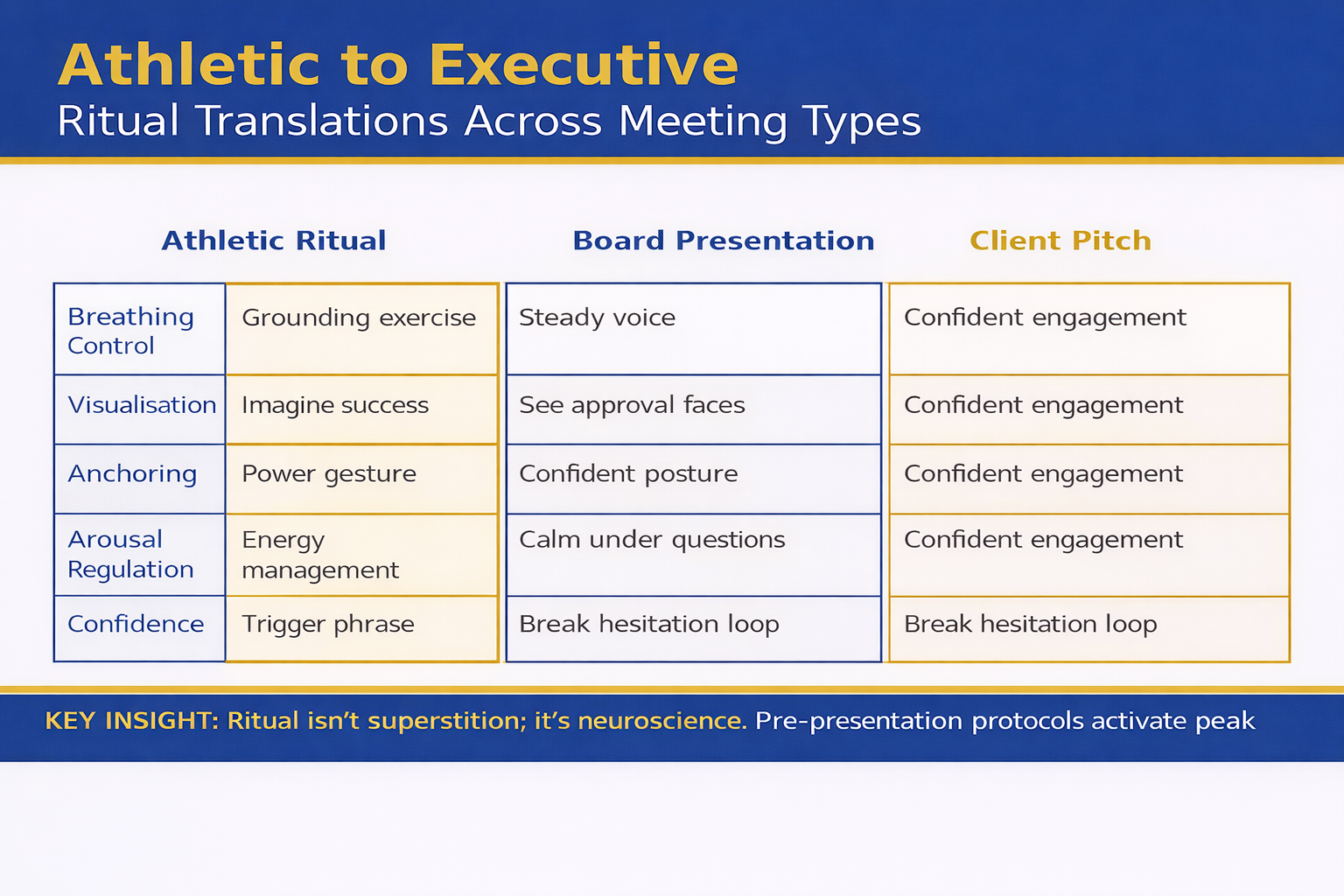
Create a pre-presentation routine. The night before, the morning of, the hour before—develop a specific sequence of actions that signal to your nervous system, “This is expected. This is manageable.” For some people it’s a specific breakfast, a particular walk, a few minutes of breathing. The content matters less than the consistency. Routines reduce the novelty and uncertainty that feed anticipatory anxiety.
Identify your specific “what if” fears and reality-test them. Not generally—specifically. If your fear is “What if they ask me something I don’t know?”, the reality is: “If they ask something I don’t know, I’ll say, ‘That’s a great question—let me follow up with you separately.’ And the presentation continues.” You’re not avoiding the fear; you’re proving to yourself that you can handle it.
Separate the days before from the day of. What you do Monday through Thursday should be different from what you do Friday morning. Early in the week, preparation and rehearsal are valuable. As you approach presentation day, shift to rest, routine, and nervous system regulation. This signals a boundary between “get ready” and “be ready.”
Managing the evening before
The evening before a high-stakes presentation is often the worst moment for anticipatory anxiety. You’ve done all the prep you can. The event is real and imminent. Your mind is searching for something to control.
Here’s what actually helps:
Do not rehearse the presentation. You’ve already rehearsed. One more run-through will not make you more confident. It will only give your anxious mind more material to second-guess. Close the laptop. Put the slides away.
Engage in something that requires focus. Cook a meal. Watch a film that demands your attention. Play a game that requires strategy. Anything that pulls your conscious mind away from the anticipatory narrative. You’re not ignoring the anxiety; you’re not giving it the spotlight.
Manage the physical symptoms directly. If you can’t sleep, don’t lie in bed fighting the insomnia. Get up. Read. Stretch. The pressure to “get good sleep before the big day” can itself generate anxiety. Sleep matters, but obsessing about sleep is counterproductive. A mediocre night’s sleep followed by a good presentation is far better than an anxious night spent worrying about sleep.
Remember that the nervousness you feel the morning of is not a problem to solve—it’s your nervous system preparing you. Some anxiety on presentation day is actually useful. It sharpens focus. It elevates your energy. The goal is not to eliminate it. The goal is to interpret it correctly: “This is not danger. This is readiness.”
Nervous System Tools for Presentation Anxiety
Conquer Speaking Fear includes breathing techniques, reframing exercises, and pre-presentation routines designed for the hours when anxiety is most intense.
Frequently asked questions
Is it normal to feel this anxious about a presentation?
Yes. High-stakes presentations trigger real physiological responses. Your nervous system perceives public performance as a potential threat. This is true across cultures and industries. The executives who manage it best aren’t those who don’t feel anxiety—they’re those who understand what anticipatory anxiety is and have tools to work with it.
Does better preparation reduce anticipatory anxiety?
To a point, yes. But after you’ve reached competence—you know your material, you can answer likely questions, you’ve done a full rehearsal—additional preparation doesn’t reduce anxiety. It often increases it because each rehearsal creates new opportunities for self-criticism. The threshold is usually after one to two solid rehearsals, not five or ten.
What if my anxiety is so severe that I’m considering cancelling the presentation?
Severe anticipatory anxiety (where you’re genuinely considering avoidance) is a signal to get support. This might be a coach, a therapist, or someone trained in anxiety management. Avoidance reinforces anxiety—it tells your nervous system, “This is genuinely dangerous.” But with structured support and targeted techniques, even severe anticipatory anxiety can be managed. You do not have to cancel.
Get practical frameworks for high-stakes presentations. Join The Winning Edge, a weekly newsletter for executives who lead with confidence. Presentation techniques, communication frameworks, anxiety management—sent to your inbox every Thursday.
Related: If you’re presenting quarterly results or a strategic plan, read The Q2 Planning Presentation: Setting Your Team Up for the Next 90 Days for a structural framework that reduces the pressure on delivery.
Anticipatory anxiety is not a sign of weakness or lack of readiness. It’s how your nervous system responds to stakes. The executives who manage it best don’t ignore the dread—they work with it. They understand what it is, they interrupt the rehearsal loop, they protect their sleep, they develop routines, and they remember that the anxiety before the presentation is almost always worse than the presentation itself. You don’t need it to disappear. You need to understand it, and then move forward anyway.
Mary Beth Hazeldine is Owner & Managing Director of Winning Presentations. With 24 years of corporate banking experience at JPMorgan Chase, PwC, Royal Bank of Scotland, and Commerzbank, she advises executives across financial services, healthcare, technology, and government on structuring presentations for high-stakes funding rounds and approvals.