

Public Speaking for Executives vs Everyone: The Distinction Most Courses Miss
QUICK ANSWER Public speaking for executives is not a polished version of public speaking for everyone. The audience reads differently, the stakes are decision-shaped rather than applause-shaped, and the structures that earn TED Talk standing ovations actively reduce credibility in front of senior approvers. The distinction is not nerves or charisma. It is a different […]

Calm Under Pressure Presenting Course: Stay Composed in the Room
A calm under pressure presenting course for senior professionals who freeze, rush, or lose clarity when scrutiny arrives. Neuroscience-based. £19.99, instant access.

Most Senior in the Room, Least Prepared: How to Recover Mid-Meeting
QUICK ANSWER Being the most senior person in the room and feeling the least prepared is a real, recurring scenario in senior careers. The technique is not to fake confidence. It is a structured response: name the moment internally, slow the pace, ask one targeted question that buys preparation time without losing authority, and route […]

High-Stakes Presentation Burnout: Why Senior Leaders Hit a Wall
QUICK ANSWER High-stakes presentation burnout is the point at which the dread before each major presentation stops easing afterwards. The relief that used to follow a successful board meeting no longer arrives. Each new presentation cycle starts from a lower baseline. The intervention is rarely “more rehearsal.” It is recognising the pattern early, restoring the […]

From Declined to Approved: Rebuilding a Board Presentation Track Record
QUICK ANSWER A board decline is a delay; a pattern of declines is a credibility problem. Senior professionals who move from declined to approved on the same kind of proposal almost always change four things: how they map the room before the meeting, how the case is structured on the page, which objections they pre-handle, […]

Buy-In Mastery: Why Executive Approval Is Learnable
QUICK ANSWER Executive approval looks like personality, but it is structure. Buy-in mastery is the curriculum senior professionals build over time: stakeholder mapping, case construction, objection pre-handling, and the presentation patterns that hold up to senior scrutiny. People who earn approval consistently are not more charismatic. They are working from a structured framework the rest […]
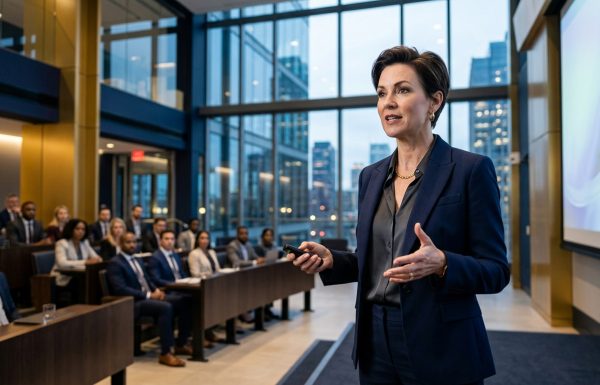
Speaking Confidence Course for Professionals: What Actually Works
Quick Answer Most speaking confidence courses are calibrated for people who have never presented before. Senior professionals who have presented for years and want to address persistent nerves, voice tightness, or pre-meeting dread need a different kind of programme — one that treats existing experience as the foundation rather than the problem. The components that […]

Sunday Dread: Why Monday Presentations Ruin Your Weekend
Quick Answer A Monday morning presentation produces a recognisable pattern in many senior leaders: Sunday afternoon contracts, Sunday evening becomes pre-meeting prep no matter how much was finished on Friday, and the actual weekend stops existing. The pattern is not a sign of weak preparation. It is the predictable result of an unfinished mental loop […]

The Confidence Plateau: Why Most Presenters Hit a Wall at Year 3
Quick Answer Most senior presenters hit a confidence plateau between years two and three. The early progress that brought them composure across most meeting types stops producing new gains. Difficult meetings still feel difficult. The reading, the courses, the additional practice no longer move the needle. This plateau is not a regression and it is […]

How Long Does It Take to Build Presentation Confidence?
Quick Answer Real presentation confidence takes longer than weekend courses promise and considerably less time than most senior leaders fear. From observing executives across two and a half decades, the honest timeline is roughly: visible composure under pressure within 6 to 8 weeks of structured work, settled authority across most meeting types within 6 months, […]