

Presentation Coaching Due Diligence: 7 Questions to Ask First
QUICK ANSWER Presentation coaching due diligence is the work a senior buyer does before paying. The single most useful question is “Who have you actually trained?” — and six others sit beside it. Together they reveal sector fit, method, format, refusal cases, time commitment, fallback if it does not work, and what the buyer actually […]

Training Fatigue: Five Presentation Courses, Still Not Confident
QUICK ANSWER Training fatigue is the quiet despair of senior professionals who have done four, five, sometimes six presentation courses and still do not feel confident in front of the rooms that matter. The diagnosis is rarely effort. It is that most courses train delivery polish for general audiences, not the senior-context disciplines — structure, […]

Coaching vs Online Course Presentation: Honest Comparison
QUICK ANSWER Coaching vs online course presentation work is rarely an either/or decision. One-to-one executive coaching solves bespoke, time-bound problems — a specific high-stakes presentation in four weeks — at a price that reflects the personal attention. A structured online course builds durable disciplines that transfer across every future presentation, at a fraction of the […]
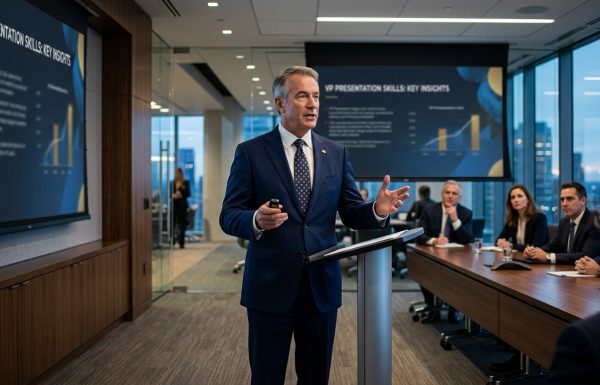
The Presentation Skills Gap at VP Level
Quick answer: The presentation skills gap at VP level is rarely about slide polish or vocal delivery. Promotion committees evaluate whether a candidate can influence a room of senior peers, structure thinking under pressure, hold composure in hostile Q&A, and represent the organisation credibly at board level. Most strong directors miss the VP step because […]

How to Present to Win Stakeholder Approval: The Senior Approver’s Logic
QUICK ANSWER Winning stakeholder approval is a discipline, not a personality trait. It rests on four things: knowing what is in each stakeholder’s head before they walk in, building the case in load-bearing order, pre-handling the predictable objections in writing, and choosing slide patterns that survive senior scrutiny. Presenters who earn approval consistently are not […]

Fear of Public Speaking Training UK: Programmes for Senior Professionals
QUICK ANSWER Fear of public speaking training in the UK ranges from open-enrolment workshops aimed at general audiences to senior-context programmes designed for executives presenting to boards, regulators, and investment committees. The right choice depends on the audience you actually present to, the moments where the fear shows up, and how much of the work […]

When Your Voice Shakes in Front of the Board: The 10-Second Reset
QUICK ANSWER When the voice starts to shake mid-board-meeting, the fix has to be fast and invisible. The 10-second reset works by reversing the physiology that causes the tremor — a longer exhale, a small drink of water, a one-word answer that buys time, and a sentence that returns you to the structure of your […]
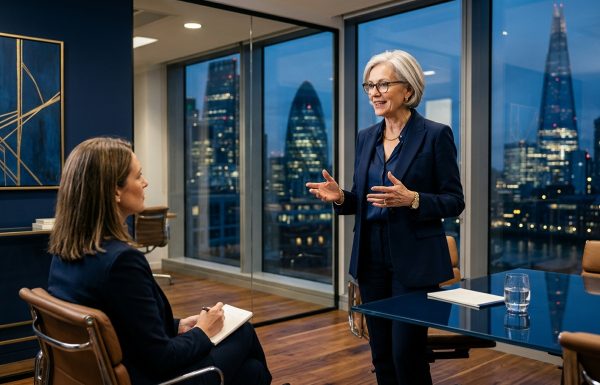
Voice Coaching for Senior Executives: Why It Differs From Public Speaker Training
QUICK ANSWER Voice coaching designed for actors, broadcasters, and public speakers solves a different problem from the one senior executives face. The brief is different (credibility under scrutiny, not projection or expressiveness), the pitch and pace targets are different, and the fixes that work on stage often signal performance in the boardroom. Senior executives need […]

TED Talk Advice That Fails in the Boardroom: 5 Techniques That Kill Credibility
QUICK ANSWER TED Talk advice was built for an audience that came to be moved. The boardroom is an audience that came to make a decision. Five techniques that earn standing ovations on stage — the personal story opening, the one big idea, the strategic pause, the call to wonder, and the rule of three […]

Public Speaking for Executives vs Everyone: The Distinction Most Courses Miss
QUICK ANSWER Public speaking for executives is not a polished version of public speaking for everyone. The audience reads differently, the stakes are decision-shaped rather than applause-shaped, and the structures that earn TED Talk standing ovations actively reduce credibility in front of senior approvers. The distinction is not nerves or charisma. It is a different […]